The 2030 World Cup is set to be a unique tournament, spanning six countries and three continents. While the main host nations will be Spain, Portugal, and Morocco, the initial three matches will take place in Uruguay, Argentina, and Paraguay. This unprecedented format marks the 100th anniversary of the tournament, which originated in South America in 1930.
The opening match on June 8, 2030, will see Uruguay play at the Centenario Stadium in Montevideo. The subsequent two games will be held in Buenos Aires, Argentina, and Asunción, Paraguay, over the same weekend. These three South American nations, along with the main hosts, have automatically qualified for the tournament. Following these initial matches, teams and fans will face a significant journey of approximately 6,000 miles to reach the group stage games in Europe and North Africa. Organizers have incorporated extra rest days to accommodate this travel, a first for a World Cup.
Host Nations and Venues
Spain, hosting for the first time since 1982, will stage the majority of the matches, with Madrid and Barcelona serving as key locations, and other cities across the country also participating. Portugal will host World Cup games for the first time, with matches scheduled for Lisbon and Porto.
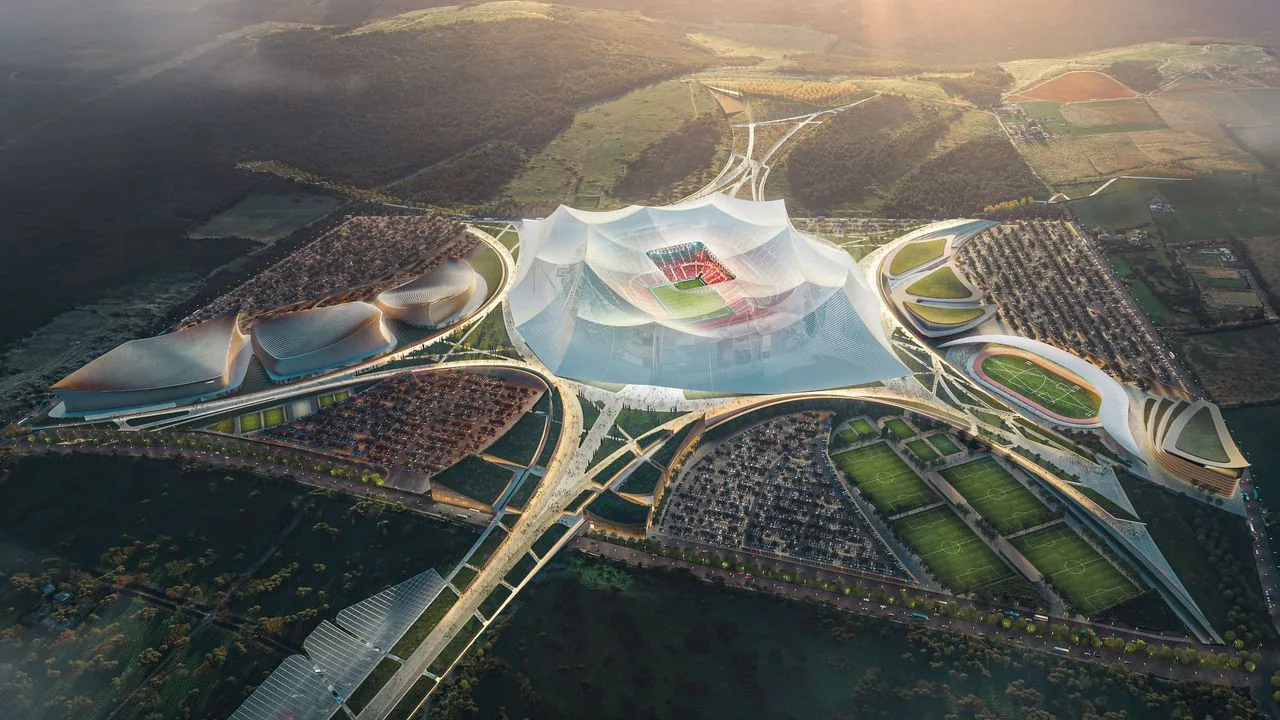
Morocco will make history as the first North African host and the second country on the African continent to host the tournament. Six Moroccan cities, from Tangier to Agadir, will host matches. A new 115,000-seat stadium, the Grand Stade Hassan II, is under construction in Benslimane, near Casablanca. This arena, designed to resemble a traditional Moroccan tent, is expected to become the world’s largest football stadium. The Centenario Stadium in Montevideo is also undergoing a 30-month renovation, which will increase its capacity from 60,235 to 63,000 and add roofs to its stands.
The final match location for the 2030 World Cup is yet to be determined, with Madrid’s Santiago Bernabéu, Barcelona’s rebuilt Camp Nou, and Morocco’s Grand Stade Hassan II all vying for the honour. A decision from FIFA is anticipated in December 2026.
Early Power Rankings for 2030
As attention shifts to the 2030 World Cup, several teams are already being considered strong contenders. These early power rankings focus on nations with a solid foundation of leading players in their twenties, providing confidence for the upcoming four-year cycle.
Spain, as the defending World Cup champion and a co-host, is considered a favourite. Under Luis de la Fuente, the team is expected to be a formidable force. Key players like Unai Simón (32), Gavi (25), Pedri (27), Nico Williams (27), and Lamine Yamal (22) are projected to play significant roles. Emerging talents such as Dean Huijsen (25), Cristhian Mosquera (25), and Fermin López (27) could also feature.
France is another strong contender, with Zinedine Zidane taking over as coach. The squad boasts experienced players like Mike Maignan (34), Dayot Upamecano (31), and Kylian Mbappé (31), supported by younger talents such as Michael Olise (28) and Désiré Doué (24). The team’s midfield is also robust with players like Manu Koné (29) and Aurélien Tchouaméni (30).
England demonstrated resilience in the previous tournament, reaching the semi-finals. With a strong core including Marc Guéhi (29), Djed Spence (29), Declan Rice (31), Jude Bellingham (26), and Bukayo Saka (28), they are poised for a strong showing. The team’s depth is further highlighted by players like Lewis Hall (25), Cole Palmer (28), and Phil Foden (30).
Morocco, as a co-host, has shown significant progress with back-to-back World Cup quarter-final runs and an Afcon 2025 title. Key defenders include Achraf Hakimi (31) and Noussair Mazraoui (32), while midfielders like Ayyoub Bouaddi (22) and Azzedine Ounahi (30) are expected to excel. The team also benefits from talent from their U-20 World Cup-winning squad, including forwards Othmane Maamma (24) and Yassir Zabiri (25).
Argentina, despite the absence of Lionel Messi, has a strong lineup with players like Julián Álvarez (30), Lautaro Martínez (32), and Enzo Fernández (33). Their defensive stalwarts include Nahuel Molina (32), Cristian Romero (32), and Lisandro Martínez (32). The team also has promising young players from their U-20 World Cup runner-up squad, such as midfielder Milton Delgado (24).
Portugal, with a strong goalkeeping presence in Diogo Costa (30) and a solid defensive base with Gonçalo Inácio (28) and Nuno Mendes (27), is also a team to watch. Midfielders like João Neves (25) and Vitinha (30) are expected to be central to their strategy, alongside attackers such as Gonçalo Ramos (28) and João Félix (30).
Norway impressed in the previous tournament, reaching the quarter-finals, and is expected to be a strong contender in 2030, largely due to the continued presence of Erling Haaland (29). He will be supported by players like Andreas Schjelderup (26), Antonio Nusa (25), and Oscar Bobb (26) in the attack, with Martin Ødegaard (31) orchestrating the midfield.
Côte d’Ivoire also showed promise, advancing from a challenging group in the last tournament. With a talented squad, including goalkeeper Yahia Fofana (29), they are expected to perform well as part of the tournament returns to Africa.
The 2030 World Cup will feature 104 matches over approximately six weeks, with the final scheduled for July 21, 2030.

Read Also
Source: theguardian.com