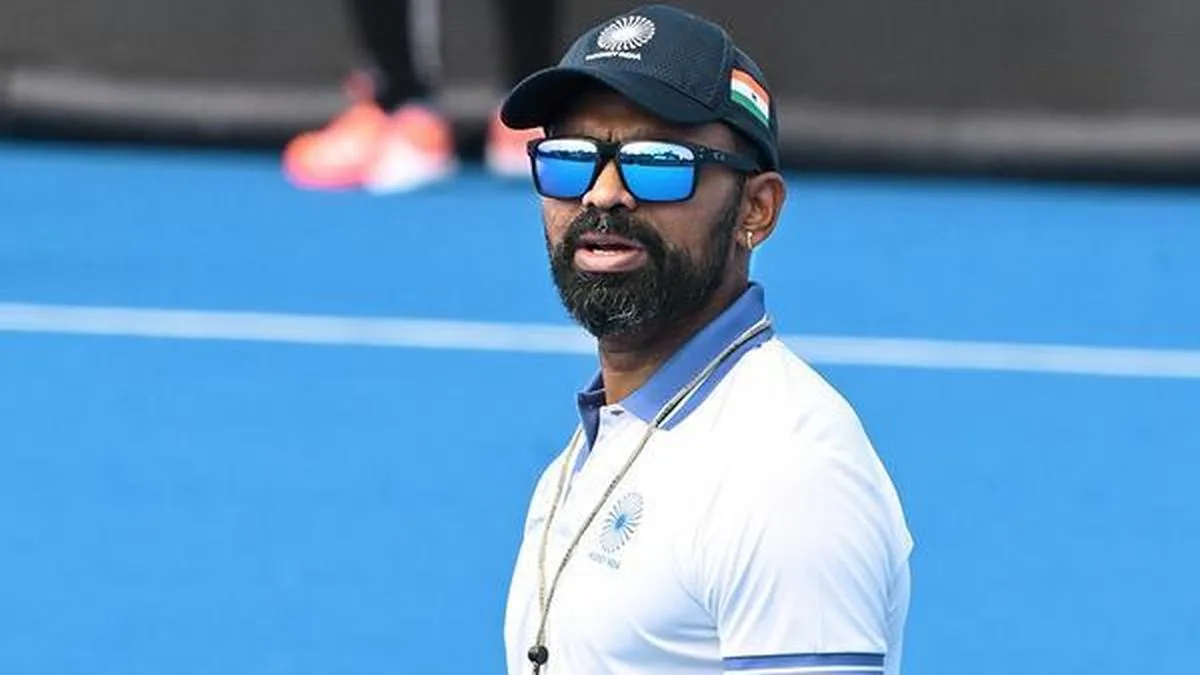
P.R. Sreejesh, a prominent Olympian, has voiced his disappointment regarding India‘s performance in the Men’s FIH Pro League over the past two seasons. He specifically highlighted the team’s eighth-place finishes, suggesting that the standings could have been worse without the participation of Ireland and Pakistan.
Sreejesh’s comments, shared on X, questioned the effectiveness of the ‘foreign chief coach’ given the results in global competitions. He stated that his criticism stems from a desire for higher standards in Indian hockey, rather than opposition to the sport itself. He emphasized that true supporters ask difficult questions to push for improvement.
Performance in Pro League and Other Tournaments
Over the last two Pro League campaigns, both under the coaching of Craig Fulton, India consistently finished near the bottom of the standings. Despite these results, there is context to India‘s approach to the Pro League. The team has often used this global event to experiment with different playing styles and to integrate new players into the squad.
While the Pro League offers qualification tickets for major tournaments like the World Cup and the Olympics, a lack of success in this league does not always reflect the team’s overall capabilities. For instance, a Fulton-coached India team finished seventh in the 2023-2024 season of the Pro League, but subsequently secured a bronze medal at the Olympics in Paris less than two months later.
Sreejesh acknowledged India‘s victories in the Asian Champions Trophy and the Asia Cup, but he argued that these continental events are no longer suitable benchmarks for assessing Indian hockey‘s global standing. He noted that India is significantly ahead of other Asian teams, making success in regional tournaments an expectation rather than a true measure of global competitiveness.
The focus on winning the Asia Cup in Bihar in 2025, for example, was primarily to secure an easier route to a World Cup ticket for 2025, rather than expending significant energy on the Pro League in 2024, which was months before the Olympics. The Pro League table, according to Sreejesh, accurately reflects India‘s position against the world’s top teams.
Questions on Investment and Standards
Sreejesh also raised concerns about the financial investment in the ‘foreign chief coach’. He questioned whether spending approximately €24,286 (around INR 25 lakh) per month on a foreign chief coach is solely for dominating Asian competitions, or if it is an investment aimed at making India a genuine medal contender in the World Cup, Pro League, and Olympics.
He asserted that being content with regional success while struggling against elite international teams should not be the standard for Indian hockey. Sreejesh’s remarks included a direct challenge to the notion that the team is merely trying new players or strategies, especially when considering the significant expenditure on coaching.
Sreejesh’s previous role involved leading India‘s junior programme for a couple of years, during which he guided the junior team to a bronze medal at the Junior Men’s Hockey World Cup. However, his contract was not renewed by the federation, and he was replaced by Frederic Soyez. He had previously criticized Hockey India for not extending his tenure in the junior head coach position.
His current critique underscores a broader sentiment that while India‘s junior team can defeat teams like Pakistan, indicating a gap between India and the rest of Asia, the true challenge lies in consistently competing with the world’s top teams.
Sreejesh’s comments suggest a call for accountability and a re-evaluation of the strategic direction of Indian hockey, particularly concerning the balance between regional dominance and global competitiveness. He believes that supporting the team means asking tough questions to achieve higher standards.
The legendary shot-stopper’s statements highlight a debate within Indian hockey about the optimal path to achieving sustained success on the international stage, beyond just continental victories. He concluded by emphasizing that real supporters want higher standards, not lower expectations.
Read Also
Source: newindianexpress.com