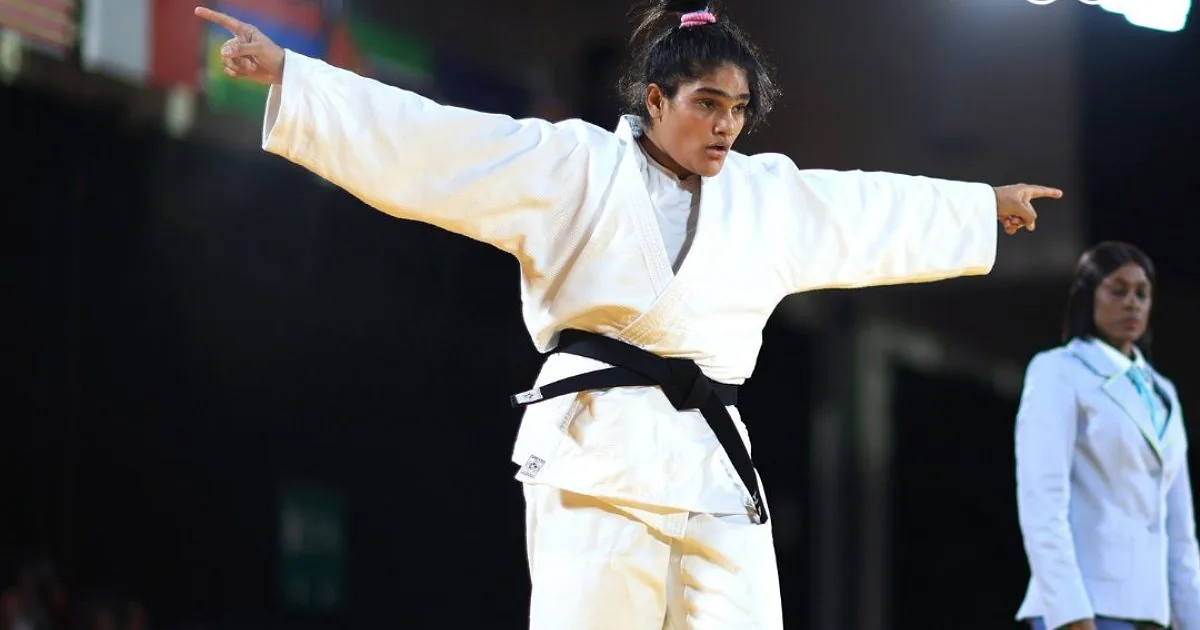
Judo campaign faces setback
India’s judo campaign for the 2026 Commonwealth Games in Glasgow has encountered a significant challenge with the withdrawal of Tulika Maan. The silver medallist from the 2022 Commonwealth Games in Birmingham has been provisionally suspended by the National Anti-Doping Agency (NADA) due to three whereabouts failures within a 12-month period. This development follows closely on the heels of another Indian judoka, Arun Kumar, being ruled out of the Games after failing a dope test.
Mukesh Kumar, president of the Judo Federation of India (JFI), confirmed Maan’s withdrawal and stated that the matter is under investigation. He highlighted that athletes are required to disclose their whereabouts to NADA for timely testing, a requirement that Maan reportedly did not meet. Maan has been called to the NADA office to address the situation.
The Glasgow Games judo competition is scheduled to run from July 31 to August 2. Maan, who secured a silver medal in the women’s +78kg category at the 2022 Commonwealth Games, was considered a strong medal prospect for India in Glasgow.
Understanding whereabouts failures
The whereabouts system is a critical anti-doping regulation designed to facilitate random, unannounced out-of-competition testing for elite athletes. Athletes who are part of a Registered Testing Pool (RTP) must regularly submit their location details. This typically involves providing location information every three months through platforms like WADA’s ADAMS or the Athlete Central app.
Additionally, these athletes are required to designate a fixed 60-minute time slot each day when they will be available at a specified location for testing. If a doping control officer attempts to conduct a test during this window and the athlete is not found, it can be recorded as a missed test. Similarly, failing to submit or update location details is classified as a filing failure.
Under anti-doping regulations, a combination of three missed tests or filing failures within a rolling 12-month period constitutes an anti-doping rule violation. Such violations can lead to suspensions ranging from one to two years. Maan now faces a potential two-year ban as a consequence of her three whereabouts failures.
Previous cases and team impact
This is not an isolated incident for Indian athletes. Sprinter Hima Das previously received a 16-month retrospective suspension from NADA for three whereabouts failures over a 12-month period. Boxer Parveen Hooda was also suspended by the International Testing Agency (ITA) for similar violations, which resulted in her being stripped of her bronze medal from the 2022 Asian Games.
The Indian judo team’s departure for Glasgow is scheduled for July 27. The team had originally been approved with 14 members, comprising seven men and seven women. In the previous edition of the Commonwealth Games, India’s six-member judo contingent secured three medals, including two silver and one bronze. Maan’s provisional suspension marks her as the second judoka to be withdrawn from the Glasgow Games due to anti-doping violations, following Arun Kumar’s provisional suspension for testing positive for an anabolic steroid.
Arun Kumar, who competes in the men’s -73kg category, had a notable rise in his career, winning gold at the 2023 Macau Junior Asian Cup and the 2025 Taipei Asian Open, along with a bronze at the Hong Kong Asian Open. He also finished seventh at the Tashkent Grand Slam earlier this year, which led to his initial selection for the Commonwealth Games. The NADA hearing for Tulika Maan is expected to determine the final outcome of her provisional suspension.
Source: timesofindia.indiatimes.com