Historic Victory at Azteca Stadium
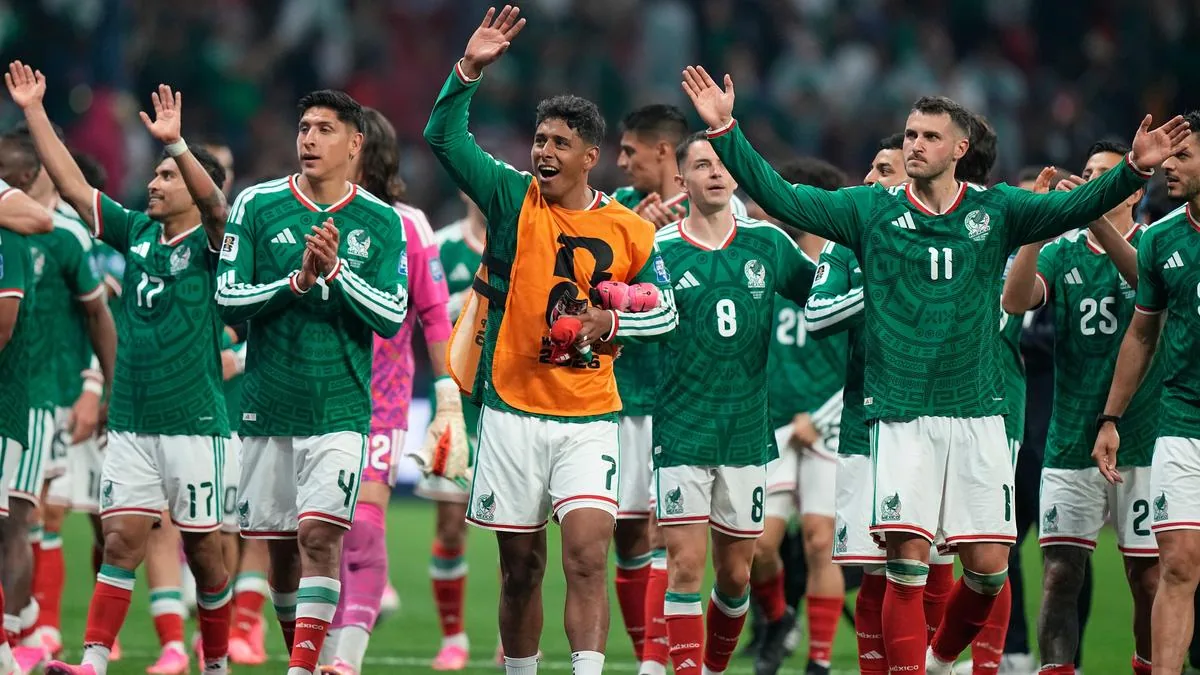
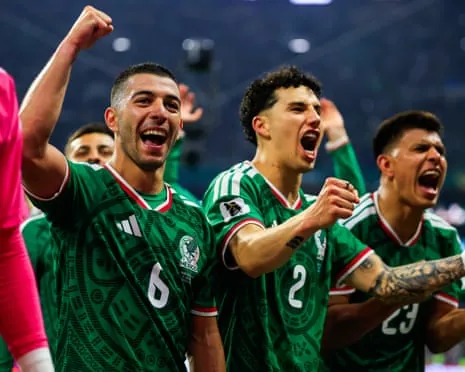
Mexico secured a significant World Cup knockout stage victory, defeating Ecuador 2-0 in a match that took place at the iconic Azteca Stadium. This win marks the first time El Tri has advanced past the knockout stage since 1986, breaking a four-decade-long dry spell. The atmosphere in the stadium was described as roaring and pulsating throughout the evening, despite an initial delay.
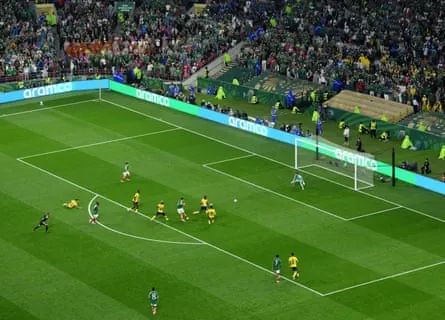
The match, which was postponed for an hour due to an electric storm, saw Julián Quiñones open the scoring in the 22nd minute. Quiñones received a well-placed pass from Jésus Gallardo, driving the ball into the net. This goal was Quiñones’ third of the tournament, positioning him as the team’s second-best scorer in World Cup history, trailing only Luis “Matador” Hernández and Javier “Chicharito” Hernández, who each have four goals.
The second goal came in the 31st minute from Raul Jiménez, who is 35 years old. Jiménez capitalized on a clearance by Joel Ordóñez, exchanging passes with Quiñones before scoring past Hernán Galíndez. This marked Jiménez’s second goal of the tournament, bringing his national team total to 47, surpassing Jared Borgetti. He is now five goals shy of tying “Chicharito” Hernández as Mexico‘s all-time leading scorer.
The victory extended Mexico‘s unbeaten streak to 12 games, a run that began after a friendly loss against Paraguay in November. This also made Mexico the first CONCACAF side to eliminate a CONMEBOL side in a World Cup knockout match, overturning a trend where South American teams had won the previous five such encounters.
Impact of Travel on Performance
The match was not without its pre-game complications, particularly for Ecuador. The team experienced a significant travel delay on their journey to Mexico City. What was expected to be a little over a three-hour trip turned into a nine-hour ordeal, prompting a formal complaint from the Ecuadorian Football Federation to Fifa. The federation described the events as “unsportsmanlike,” citing concerns about fair play and equity.
According to Julio Caballero, a physiotherapist and doctor in Biomedicine and Health Sciences, such travel conditions can significantly impact a match’s outcome. He notes that the extensive travel required in this World Cup, spread across the United States, Mexico, and Canada, forces national teams to contend with long waits, extended flights, and compromised recovery times. This contrasts sharply with the previous World Cup in Qatar, where teams were largely based in one location with minimal travel.
Caballero emphasizes that travel fatigue can manifest after prolonged periods of sitting, leading to disrupted routines, poor sleep, and accumulated physical and mental stress. He explains that this phenomenon, often underestimated in elite sports, can affect performance even without significant time-zone changes. The issue extends beyond jet lag, encompassing muscle stiffness and reduced mobility due to hours spent seated, which can leave players less prepared for the high-intensity demands of a knockout match.
Medical teams employ various strategies to mitigate the impact of travel. Before flights, the focus is on activating muscles without causing fatigue, targeting areas like the gluteus medius, hamstrings, and foot musculature, along with hip and ankle mobility. During flights, priorities include avoiding immobility through postural changes, small calf contractions, adequate hydration, and sometimes compression garments to reduce edema and heaviness in the legs.
Looking Ahead
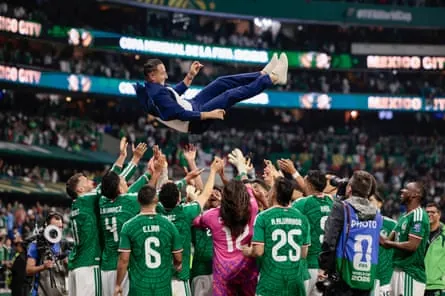
Mexico‘s head coach, Javier Aguirre, expressed the significance of this win, particularly as two of the previous early exits in 2002 and 2010 occurred during his earlier tenures. He highlighted the family-like bond within the team and described the victory as unparalleled due to it happening at home with their supporters. Aguirre became a grandfather for the third time on Monday, adding a personal note to the celebratory occasion.
The team’s performance was bolstered by 17-year-old Gilberto Mora, who delivered an astonishing performance from the right side of a midfield three. His range, scope, and quick feet were instrumental in Mexico‘s strong first-half showing. Ecuador‘s best chance in the second half came from substitute Kevin Rodríguez, who shot wide, and defender Piero Hincapié was dismissed in added time for violating mouth-covering rules.
Mexico will now face the winner of the match between England and the Democratic Republic of the Congo in the last-16 tie. This upcoming match is scheduled for Sunday, July 5, 2026, and will be the final game of this summer’s tournament to be held in Mexico.
Ecuador had been aiming to reach the round of 16 for only the second time in their history, with their last appearance being in Germany 2006.
Read Also
Source: theguardian.com