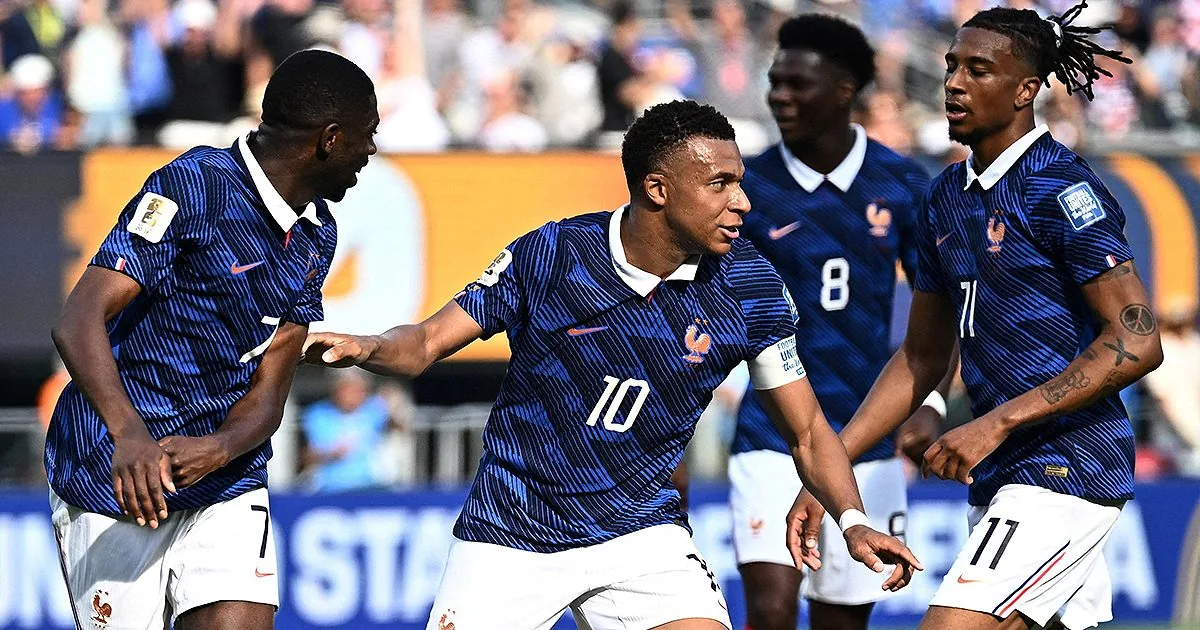
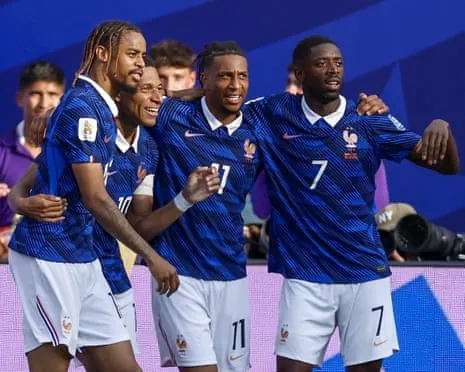
France‘s attacking prowess, featuring players like Kylian Mbappé, Ousmane Dembélé, and Michael Olise, has led to comparisons with some of football’s most celebrated forward lines. This offensive strength has been a key factor in their progression to the World Cup last 16, with Didier Deschamps‘ side demonstrating significant goal-scoring ability.
The combination of Mbappé, Dembélé, and Olise has contributed to a substantial portion of France’s goals in the tournament. Olise, in particular, has emerged as a central creative force, providing five assists. The understanding between these attacking players has been highlighted, with Deschamps noting that they “speak the same football language.”
Tactical adjustments enhance French performance
Deschamps has a history of adapting his team’s tactics during tournaments, and this World Cup has been no exception. The coach has made strategic adjustments to maximise the effectiveness of his top attacking talent, particularly Mbappé, who prefers to be actively involved in play rather than solely a finisher.
Initially, France adopted a system that aimed to fit players into their club roles, such as Mbappé as a roaming striker for Real Madrid and Olise on the right wing for Bayern Munich. However, during the opening match against Senegal, Deschamps identified areas for improvement, particularly in defensive spacing and offensive positioning.
One significant change involved swapping the roles of Olise and Dembélé. Moving Dembélé from a central position to the right of midfield has reportedly improved France’s defensive solidity due to his work-rate in a wider position. This adjustment has helped France form a more compact defensive unit, blocking space rather than pressing high in a 4-4-2 formation.
Olise’s more central positioning has also benefited Mbappé, as Olise is adept at threading through balls between defenders. This tactical shift has made launching dangerous counter-attacks more viable. While Dembélé’s natural instinct is to drop deep from a traditional centre-forward position, Olise, who sees himself as a number 10, tends to stay deeper before making runs into the box, a dynamic that has worked well for France during extended attacking phases.
Furthermore, Jules Kounde has been positioned more centrally during settled attacking possession. This allows him to provide immediate cover if possession is lost and also acts as a decoy, drawing defenders away from the wingers or making late overlapping runs. Dembélé has thrived in this adjusted setup, notably scoring a first-half hat-trick against Norway from the right-wing position.
Depth and collective spirit
France’s attacking strength extends beyond their starting lineup. Players like Bradley Barcola, Desire Doué, and Rayan Cherki offer additional offensive options, ensuring strong competition for places. Barcola, for instance, has scored two goals and provided an assist despite not being a guaranteed starter.
Deschamps has also successfully instilled a collective spirit within the squad, encouraging elite forwards to contribute defensively. Mbappé, as captain, is cited as an example of this commitment to the team’s collective effort. This emphasis on teamwork is seen as crucial for success, with Deschamps acknowledging that while team spirit alone does not guarantee victory, its absence can lead to defeat.
The attacking quartet of Mbappé, Olise, Dembélé, and Barcola has accounted for 12 of France’s 13 goals in four matches.
Read Also
- Bangladesh Cricket Board invites bids for media rights for 2026–27 home series
- Mexico City: Mexico ends World Cup knockout drought with win over Ecuador
- Kishan replaces Abhishek Sharma as top T20I batter; Head leads Test rankings
- Chennai Super Kings enter race for Hardik Pandya amid Mumbai Indians trade talks
Source: theguardian.com