
England’s Resurgence at Trent Bridge
England staged a significant comeback on the second day of the deciding Third Rothesay Test against New Zealand at Trent Bridge. The hosts, after initially facing a challenging position, managed to dismiss New Zealand for 438 and then closed the day on 223 for two, trailing by 215 runs. This recovery was largely driven by an inspirational bowling spell from captain Ben Stokes and a rapid century from opener Ben Duckett.
The turnaround was particularly notable given that New Zealand had reached 317 for no loss on the opening day. England‘s bowlers claimed all 10 wickets for 121 runs, demonstrating a strong collective effort in the sweltering conditions. Stokes, returning to the side after missing the second Test, played a pivotal role in this fightback, leading from the front with his bowling.
Duckett’s Century and Batting Partnership
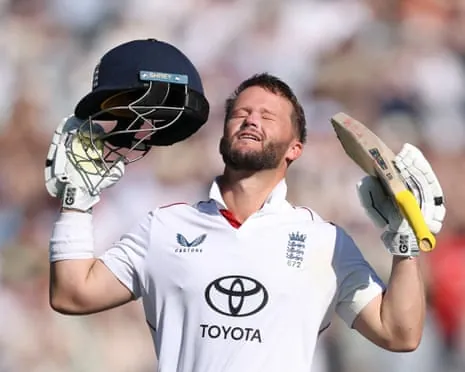
Ben Duckett delivered a scintillating performance, scoring 113 runs from only 88 balls, marking his seventh Test century and his first in nearly a year. His innings was crucial in providing England with a solid platform. He was supported by Jacob Bethell, who remained unbeaten on 74, registering his first Test half-century in the first innings at home.
The partnership between Duckett and Bethell added 179 runs from exactly 179 balls for the second wicket. This rapid scoring rate, at six runs an over, put pressure on the New Zealand attack, which was already dealing with absences and an injury. Duckett‘s innings saw him pierce the infield with regularity, reaching his half-century from 40 balls and turning Trent Bridge into his personal playground.
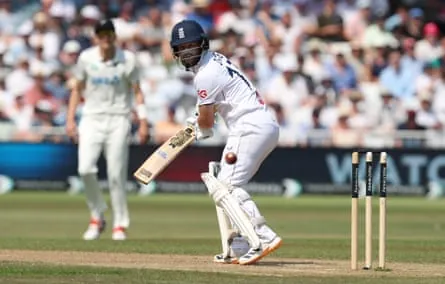
Duckett‘s century was a moment of personal vindication, especially after a period of mixed form and a decision to withdraw from the Indian Premier League to focus on red-ball cricket with Nottinghamshire. He had been dropped on eight by Henry Nicholls at third slip, a moment of fortune that he capitalised on fully. His celebration, including repeat punches of the air, indicated a player unburdened by previous struggles.
After Duckett was eventually dismissed, chopping onto his stumps off Nathan Smith, Joe Root joined Bethell at the crease. The pair held firm until the close of play, with Root reaching 21 not out. Despite the loss of Duckett and a slight slowing of the scoring rate, England maintained their momentum, leaving New Zealand with a significant task ahead.
Stokes’ Leadership and Bowling Effort
Captain Ben Stokes was central to England‘s bowling fightback. His figures of four for 70 included a spell of eight overs, three for 13, before lunch on the second day. Bowling with verve and varying his angles, Stokes provided the crucial breakthroughs that stifled New Zealand‘s scoring.
His efforts included dismissing Daryl Mitchell, who was adjudged to have edged behind after a review, and later accounting for Mitchell Santner in a moment of controversy. Santner was given out caught at gully after a short ball from Stokes, with the third umpire ruling that the ball had brushed the wristband of his glove. These wickets were vital in limiting New Zealand‘s total.
The New Zealand attack faced challenges, with Blair Tickner suffering dizzy spells after being struck by Jofra Archer, leading to his replacement by concussion substitute Zak Foulkes. This, coupled with the absences of Matt Henry and Kyle Jamieson, stretched their bowling resources. Shoaib Bashir and Archer also contributed to the wicket-taking, with Bashir trapping Tom Blundell lbw and taking a return catch off Nathan Smith.
The collective effort of the England team, inspired by Stokes‘ leadership and Duckett‘s batting, has brought them back into contention in this crucial Test match. The team’s spirit was evident, with players showing determination in challenging conditions, reminiscent of their memorable win in 2022 at the same venue.
Read Also
Source: theguardian.com