Madibo receives five-match ban
Assim Madibo, a midfielder for Qatar, has been handed a five-match ban by FIFA following a challenge on Canada‘s Ismael Kone. The incident occurred during Qatar‘s match against Canada, where Kone sustained a broken leg. The decision was announced by FIFA‘s disciplinary committee and is subject to appeal.
The foul, which took place during Qatar‘s 6-0 defeat, resulted in Kone suffering fractures to both the tibia and fibula bones in his lower left leg. The injury means Kone will miss the remainder of the tournament, and likely a significant portion of the upcoming domestic season. He underwent surgery shortly after the game in Vancouver.
Initially, the referee, Cristian Garay, issued a yellow card for the foul. However, this was later upgraded to a red card once the severity of Kone‘s injury became apparent. Madibo did not protest the red card decision, which the referee made without consulting a replay.
FIFA‘s statement indicated the ban was for a breach of article 14.1.e (serious foul play) of the FIFA Disciplinary Code. This five-match suspension is an increase from the initial mandatory one-game ban that typically follows a red card. Madibo has played 64 times for Qatar and had not previously been sent off at the international level, suggesting his past conduct was not a factor in the decision.
Reaction to the decision
The decision has been met with some surprise, with observations suggesting that the severity of the punishment appears to be based more on the outcome of the injury rather than the intent or nature of the challenge itself. While the foul was described as reasonably bad, it was not initially deemed horrendous enough to warrant an immediate red card.
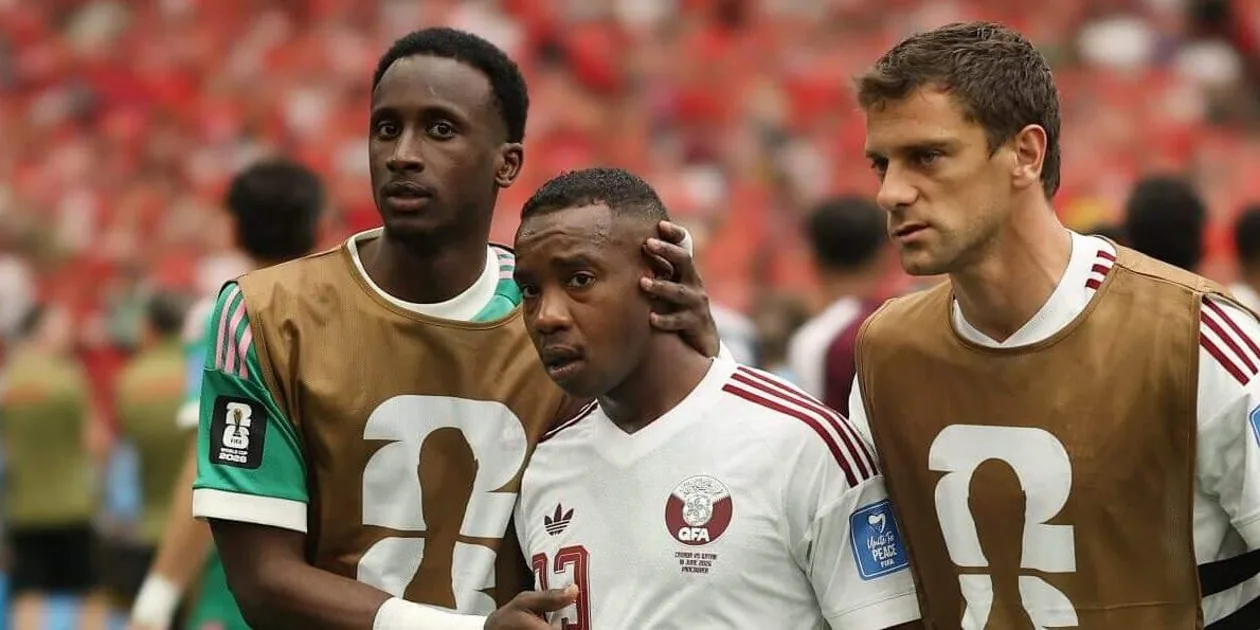
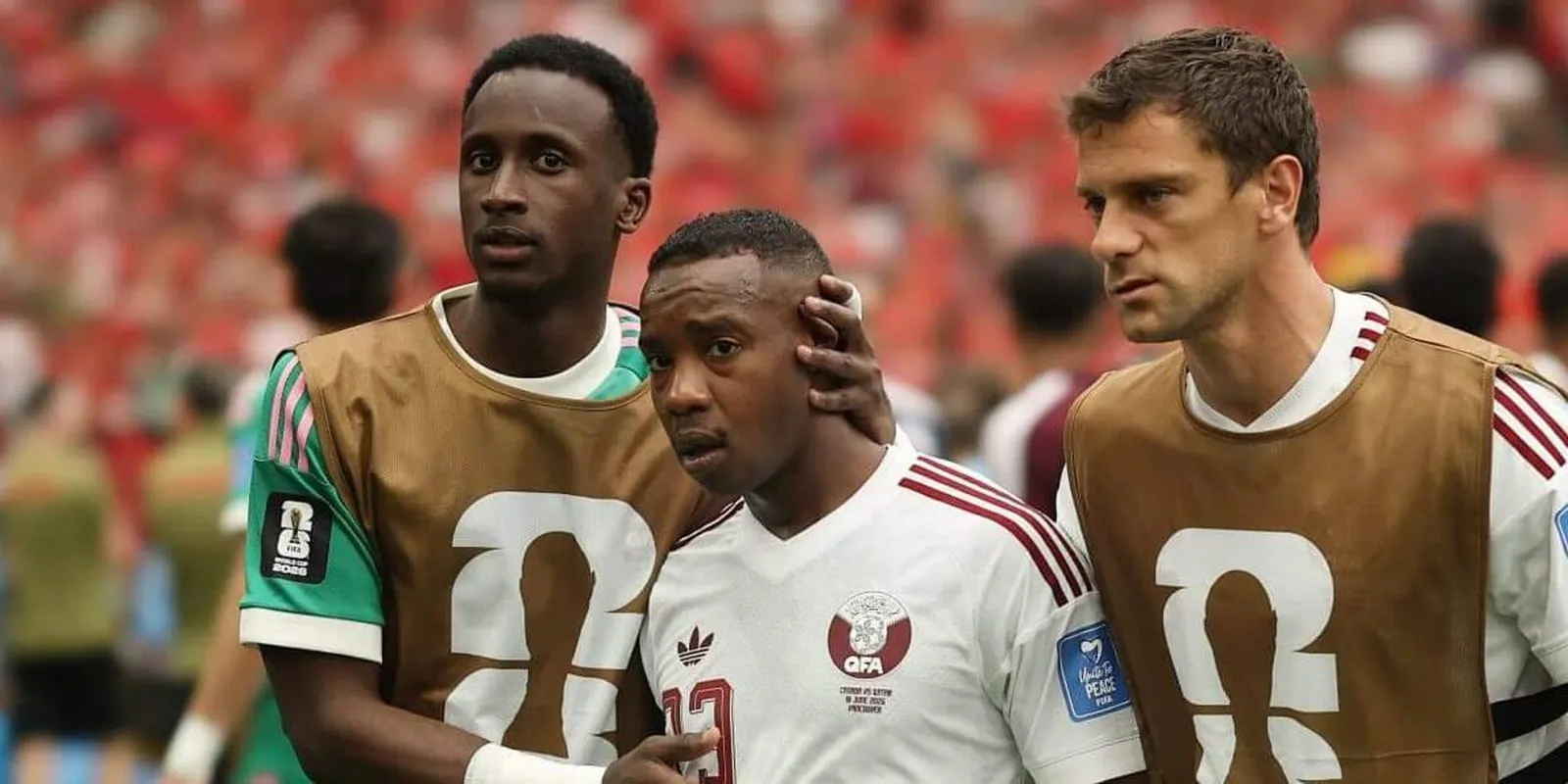
Madibo visited Kone in the hospital after the match and also went to the Canada dressing room to apologise. A photograph showed Kone hugging Madibo, indicating a lack of significant ill will from the injured player towards the Qatar midfielder. Even Canada coach Jesse Marsch, who was understandably upset at the time, stated after the game that he did not believe Madibo intended to cause such a severe injury.
The laws of the game define serious foul play as using excessive force or brutality against an opponent. While a challenge strong enough to break a leg could be argued to involve excessive force, leading to a red card and a minimum two-match ban, a five-game suspension is considered by some to be an overreaction.
This decision also stands in contrast to other instances where FIFA has shown flexibility with suspension lengths. For example, some players, including Nicolas Otamendi and Moises Caicedo, had one-game suspensions waived to ensure teams could field their strongest squads. Madibo‘s teammate, Tarek Salman, also benefited from this amnesty.
FIFA‘s rationale for waiving other suspensions was to allow teams to compete with their strongest possible squads. However, this consideration does not appear to have been applied in Madibo‘s case. He served one game against Bosnia and Herzegovina, and if the ban is not reduced on appeal, the remaining games will not impact Qatar‘s participation in the current World Cup.
Qatar needs to defeat Bosnia and Herzegovina to maintain any chance of advancing from the group stage. Canada, on the other hand, will play Switzerland in their final group game, hoping to qualify for the last 32 as group winners.
Read Also
Source: nytimes.com