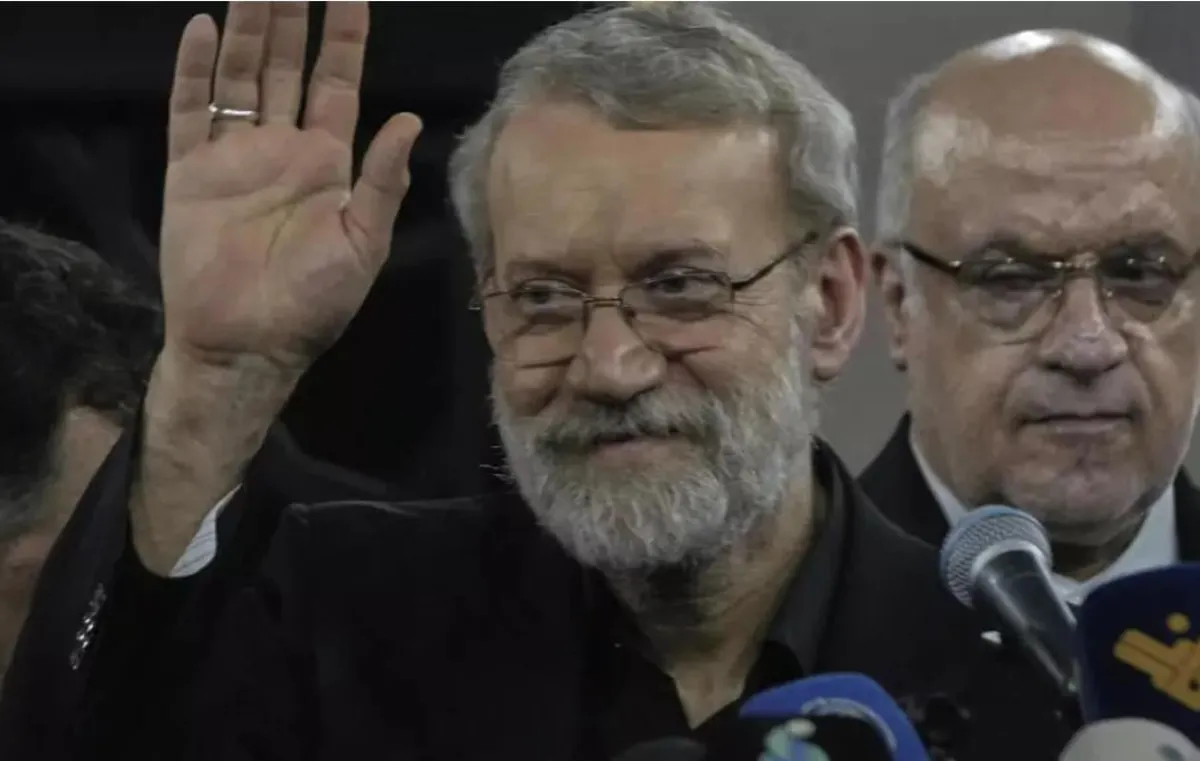
Ali Larijani, currently serving as the Secretary of the Supreme National Security Council of Iran, has resumed this influential role for the second time since August 2025. His extensive political career includes positions as a Minister, Speaker of Parliament, and multiple attempts at the presidency, making him a prominent figure in Iran’s governance.
Regarded as a pragmatic conservative by Western powers, Larijani has been involved in negotiations with them, which adds a layer of complexity to his political standing. However, his reputation is marred by criticism; political scientist Mahnaz Shirali has labeled him a “criminal against humanity,” reflecting the deep divisions in Iranian society regarding his leadership.
Azadeh Kian, a professor emeritus of sociology, highlights the precarious nature of Larijani’s authority, stating, “It is not obvious that his orders will actually be followed, particularly by the Revolutionary Guards, who are a state within a state.” This skepticism raises questions about the effectiveness of his leadership and the extent to which he can influence Iran’s military and political apparatus.
Despite his experience and connections, observers suggest that Larijani’s political weight may only extend to negotiating a departure from the regime rather than embodying the future of Iranian power. Kian further asserts, “If the Americans or the Israelis wanted to eliminate him, he would be eliminated like the others,” indicating the precarious position he occupies amid regional tensions.
The Revolutionary Guards, a powerful faction within Iran, have historically operated with a significant degree of autonomy, which complicates Larijani’s ability to assert control. As he navigates the intricate landscape of Iranian politics, the question remains whether he can unify the various factions or if his leadership will continue to be challenged.
As Larijani continues to engage with both domestic and international stakeholders, the political climate in Iran remains fraught with uncertainty. His past roles and current position suggest that while he may play a crucial part in negotiations, the broader implications of his leadership are yet to be fully realized.
Details remain unconfirmed regarding the future trajectory of Larijani’s influence and the potential shifts within Iran’s political hierarchy. Observers are keenly watching how his interactions with both the Revolutionary Guards and Western powers will unfold in the coming months.