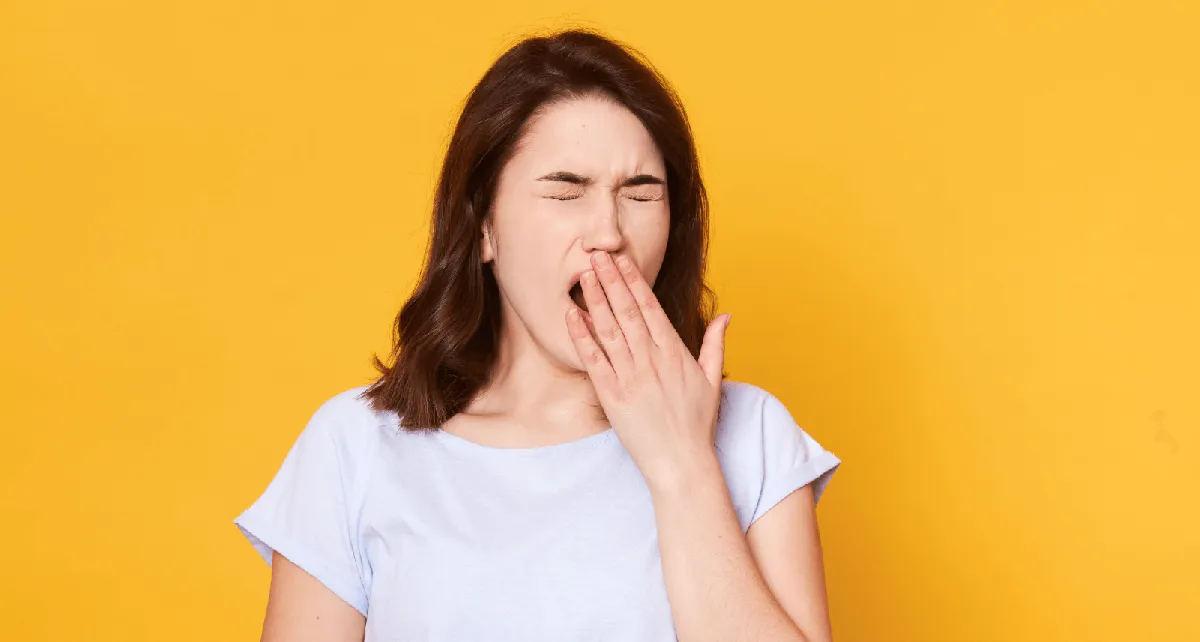
“Yawning plays a role in cleaning brain fluid, which would most likely happen close to bedtime,” says Professor Lynn Bilston, shedding light on the often-overlooked significance of yawning.
Recent research from the University of New South Wales and Neuroscience Research Australia suggests that yawning is not merely a sign of tiredness or boredom. Instead, it may serve a vital function in regulating brain temperature and maintaining optimal cerebrospinal fluid (CSF) levels. This intriguing perspective challenges long-held beliefs about this common behavior.
Yawning is prevalent among various species, from humans to reptiles. The Gaboon viper—a creature with fangs measuring approximately 2 inches—exhibits its own unique yawning behavior. Gaboon vipers yawn to relax and realign their jaws after consuming prey. Their venom can kill up to six adult humans with a single strike, making their yawns both fascinating and fearsome.
Key findings:
- Yawning may help clean and regulate the brain’s temperature.
- Each individual’s yawning signature is distinct, akin to a fingerprint.
- Gaboon vipers can deliver between 7-9 milliliters of venom per bite.
Adam Martinac, a researcher involved in the study, elaborates on yawning’s mystery: “Yawning remains very mysterious, even though it’s a primordial process that has been preserved throughout evolution.” His observation highlights how even common actions can hold deeper biological significance.
The implications of these studies extend beyond mere curiosity. Understanding yawning’s role in brain regulation could pave the way for new insights in neuroscience and evolutionary biology. As scientists continue to explore the depths of this behavior, they may uncover even more profound connections between our physiological processes and evolutionary adaptations.
The next phase of research will likely involve further exploration into individual yawning patterns and their potential links to neurological health. As Professor Bilston aptly puts it, “It’s almost like a fingerprint, so you could possibly identify someone just based on how they yawn.” This perspective could redefine how we view not only yawning but also individual differences in human behavior.