Concerns Over FIFA Leadership and Governance
An alliance led by UEFA, European football’s governing body, is exploring proposals to rotate the presidency of FIFA among the continental confederations. This initiative aims to reduce the power associated with the position, particularly if Gianni Infantino were to step down. The ongoing internal conflict surrounding the “FIFA Forward Enterprise” plan has intensified, escalating into efforts to remove the Swiss-Italian official from his role. While Infantino maintains his position, UEFA and its allies are reportedly developing future plans.
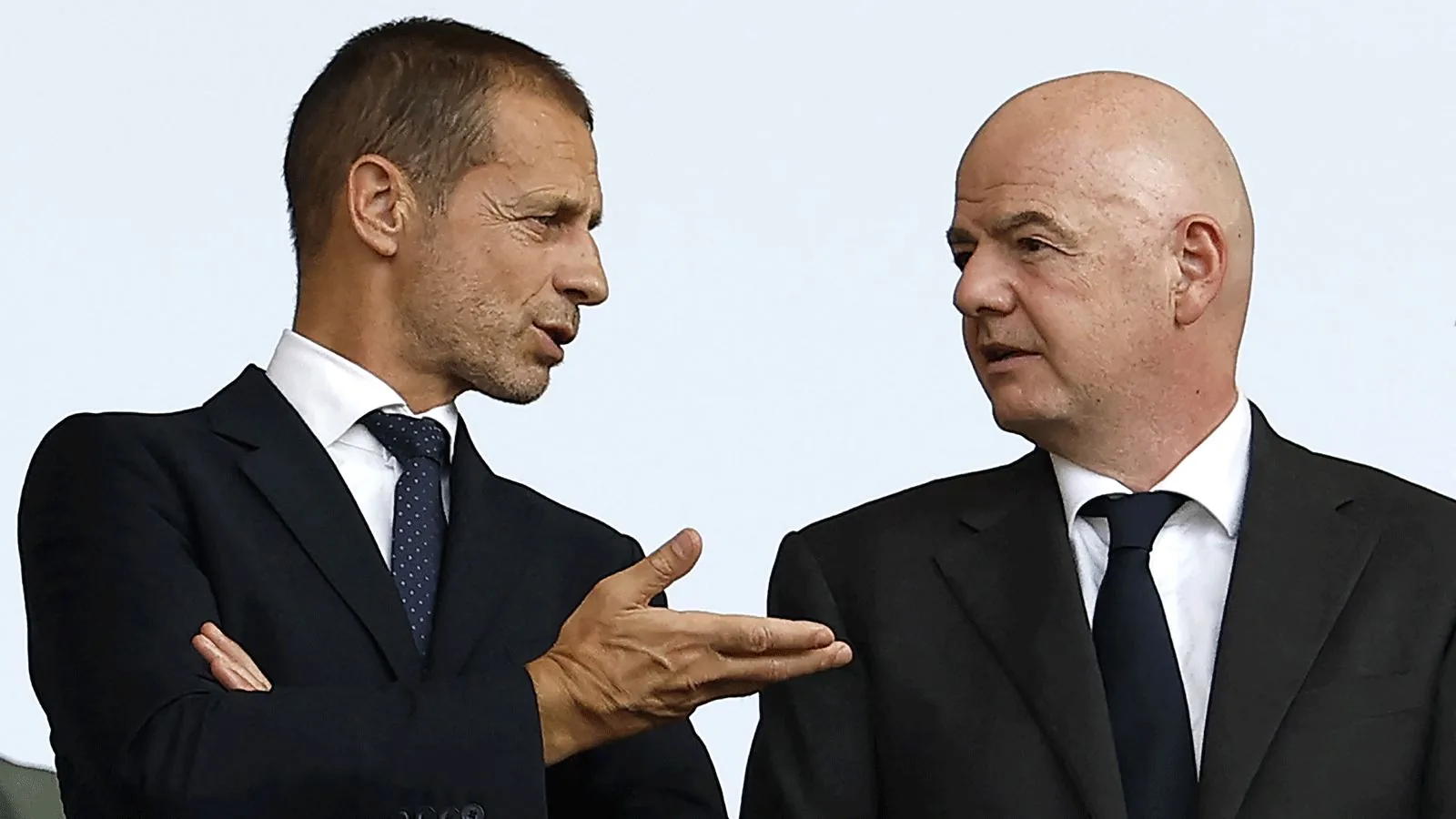
Several football leaders recently convened in Salzburg for the UEFA Super Cup. This gathering marked their first in-person collective meeting since the onset of the FIFA crisis. The crisis reportedly began when Infantino announced intentions to sell shares in the World Cup to private-sector investors. Aleksander Ceferin, the UEFA president, is understood to have conducted multiple meetings during this period. The presence of Patrice Motsepe, president of the Confederation of African Football (CAF), was noted as particularly significant, given CAF’s previous support for Infantino.
Proposals for FIFA Reform
Discussions in Salzburg reportedly included plans for an independent review of FIFA’s governance. Additionally, a policy document outlining the future structure and principles of the organisation was a topic of conversation. Some sources suggest that limiting this review to FIFA alone, without involving continental confederations, holds significance. This approach is partly linked to proposals for rotating the presidency among the continental bodies, drawing parallels with the structures of the European Union and similar multinational institutions.
Such a rotation system would mean that FIFA would no longer have a president wielding the extensive power seen with Infantino or his predecessors. Complementing this idea, there are also plans to significantly strengthen the administration surrounding the presidency, aiming for it to function more like a robust civil service body. Reports indicate that UEFA and its allies are prioritising changes in leadership and governance at FIFA as a minimum outcome of the current crisis.
A joint letter from the AFC, Concacaf, and UEFA addressed the broader football family, emphasising that football belongs to its players, fans, clubs, member associations, and institutions safeguarding its future. The letter highlighted that recent progress in football was a shared achievement involving FIFA, confederations, and member associations, not the work of a single individual. It also stated that the issue is not about money, as confederations have already advocated for the responsible distribution of FIFA’s existing reserves to support member associations.
The letter further clarified that the concerns are not about any member association losing support or revisiting decisions on competition expansions or World Cup allocations, as these were collectively made. Instead, the core issue is the integrity of the game and its elected leaders. The letter criticised a recent proposal advanced on a compressed timeline without meaningful consultation, suggesting it was designed to limit scrutiny rather than being an oversight. It also pointed out that attempting to sell an interest in the FIFA World Cup was a fundamental breach of trust.
FIFA’s own letter acknowledged mistakes in the process, which the joint letter described as a failure of judgment rather than just communication. The confederations also called for an independent third party to conduct a review of these events, rather than FIFA itself or its staff. The presence of only one elected official at a leadership meeting in Morocco, with no FIFA Council members or member associations invited, further reinforced concerns about accountability and openness, according to the joint letter signed by Salman Bin Ibrahim Al Khalifa (AFC President), Victor Montagliani (Concacaf President), and Aleksander Čeferin (UEFA President), among others.
Source: uefa.com