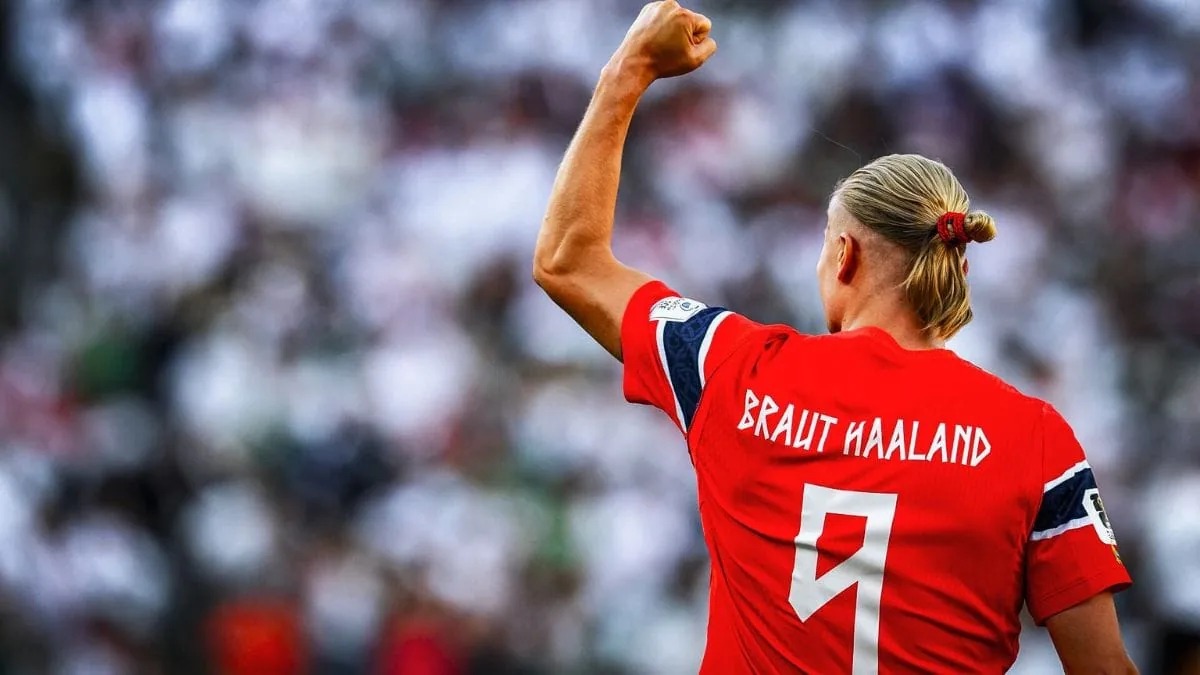
The Norwegian town of Bryne is celebrating the success of its native son, Erling Haaland, as Norway progresses in the World Cup. Locals describe the Manchester City striker as a “little boy who grew into a huge Viking,” expressing immense pride in his achievements and his continued connection to the community. His impact extends beyond the football pitch, influencing the town’s spirit and inspiring its youth.
Olinda Haaland, who shares the striker’s surname and sells merchandise for the Bryne football club, noted the widespread enthusiasm for football in the town. She mentioned that retro World Cup shirts from 1998 sold out quickly, and now any red attire is sought after by fans. The town’s central square is set to host hundreds of people for an outdoor screening of Norway’s World Cup quarter-final match against England.
Although Haaland was born in Leeds, where his father, Alf-Inge Haaland, played for Leeds United, Bryne is where he grew up and developed his football skills. The 25-year-old, who stands at 6ft 4in (1.95 metres), regularly visits his old haunts in the town. He also contributes to the community by donating football equipment to children and organising reading competitions. A 16th-century book of Viking sagas, purchased by Haaland, is expected to arrive at the local library in the autumn.
Community Pride and Early Development
Andreas Vollusund, the mayor of Bryne and Haaland’s former schoolteacher, highlighted the significant influence Haaland has had on the town. Vollusund, who taught Haaland when he was 10 years old, described him as a child who was “funny, loved joking with others, lots of energy, loved sports, loved football.” He recalled Haaland’s early determination, stating that at 10 years old, he declared his intention to become a professional footballer.
Vollusund attributes Haaland’s success partly to Bryne’s grounded, hard-working farming culture and the characteristics he inherited from his parents. His mother was a national heptathlon champion, contributing to what Vollusund referred to as “good genes.” The Norwegian emphasis on enjoyable sports for younger children is also cited as a factor in nurturing world-class athletes across various sports.
Kjell Madland, who runs Norway Chess, an organisation Haaland has invested in, noted that chess is one of Haaland’s few sporting weaknesses. Despite this, Haaland reportedly enjoys playing. On the day of the quarter-final match, the mayor plans to serve hotdogs to 3,000 children and families at an alcohol-free screening at Bryne’s football stadium, aiming to make it a significant event.
Haaland’s former coach, Alf Ingve Berntsen, who began training him at the age of eight, observed Haaland’s passion and ability from an early age. He described Haaland as being “quite similar to how he is now,” noting his humour, smile, and prolific goal-scoring. Berntsen also commented on how the World Cup has fostered a sense of togetherness across Norway.
Haaland’s Global Impact and Unique Qualities
Haaland’s recent performances in the World Cup have significantly elevated his global profile. His seven goals in the tournament place him among the top scorers, trailing only Lionel Messi and Kylian Mbappe. His match-winning brace against Brazil in the last 16 secured Norway’s greatest result last Sunday, propelling them to their first World Cup quarter-final since 1998.
Hakon Grottland, head of player development for Norway’s national association, shared an anecdote about a video of a 16-year-old Haaland in a shooting drill, where most of his attempts were off target. This, according to Grottland, highlights Haaland’s dedication to improvement, as he would stay behind to practice even after his teammates had left.
Haaland’s personality has also contributed to his widespread appeal. He is described as a self-deprecating, smiling figure who appears genuinely happy when his teammates score. Geir Jordet, a professor of psychology at the Norwegian School of Sport Science, noted Haaland’s unique blend of professionalism and a relaxed, fun-loving team player attitude. This magnetic personality was evident even in his youth, according to his former coaches.
The imagery of Haaland, who stands at 6ft 5in (196cm) and consumes a 6,000-calorie-a-day diet that includes cow hearts, liver, and raw milk, aligns with Norway’s embrace of its Viking heritage. Despite his imposing physical presence now, his formative years were described as ordinary. At a talent camp in Stavanger in June 2014, no coach selected him as a future international player.
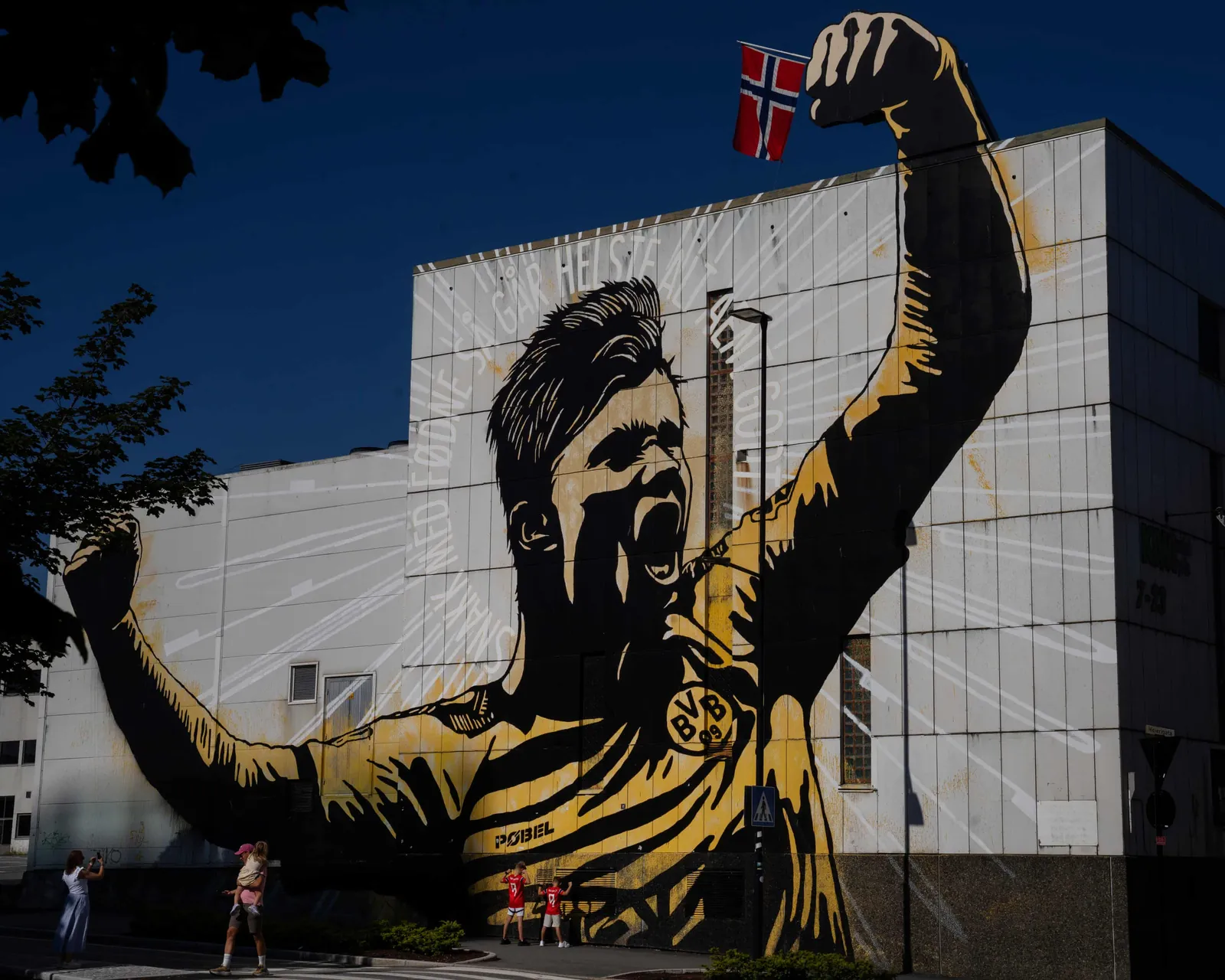
It was after this camp that Haaland experienced a rapid growth spurt, reportedly growing 20cm and gaining 20 kilograms (44lb) in a year. This late development serves as an inspiration for young athletes in Norway. Despite his humble beginnings, Haaland’s confidence was evident early on. Brede Hangeland, then Norway’s national team captain, recalled a 14-year-old Haaland confidently outlining his plans to become the best forward in the world.
Haaland’s goal-scoring record is remarkable, with 297 goals in 364 appearances for various clubs and 62 goals in 54 international matches for Norway. He has scored in each of his last 14 games for Norway. Grottland noted that Haaland’s intelligence in movement and timing, developed when he was smaller, combined with his later physical development, makes him exceptional.
Beyond his on-field brilliance, Haaland’s commercial strategy, including his YouTube channel launched last September, contributes to his popularity by offering a playful glimpse into his life off the pitch. Haaland’s recent performances, including his seven goals in the World Cup, have seen him score with his left foot, right foot, a header, from inside the box, and from outside the box.
Norway’s tactical approach under manager Stale Solbakken has been tailored to Haaland’s strengths, employing a 4-3-3 counter-attacking system. Solbakken described Haaland as easy to coach, highlighting his willingness to contribute defensively and his team-first mentality. Haaland’s tactical evolution includes dropping deeper to create long-range shooting opportunities, a tactic that led to his stunning outside-the-box goal against Brazil. Norway is set to face England in the 2026 FIFA World Cup quarter-final at the Miami Stadium.
Read Also
Source: theguardian.com