
A betting exchange differs from fixed-odds betting because users can take either side of a market instead of accepting one preset bookmaker price. Odds are shaped by available volume, open offers and the timing of other users, so liquidity matters as much as match selection. A clear routine helps avoid chasing swings, especially when prices move quickly and unmatched bets stay on screen. The focus should be practical: choose the right market, understand commission, check account access, and manage entries and exits with control. When fees or limits are discussed, they matter only if they change the net result or the ability to move funds smoothly.
Betting Exchange Online Basics: Matching Odds and Commission
At the core, exchange markets work like matching engines. Your order sits at a chosen price until another user accepts the other side. If the price looks attractive but nobody matches it, the issue is not necessarily the odds; the issue may be thin liquidity. This is why one major cricket or football market can feel fast and stable, while a smaller event moves in sudden steps. Commission is usually easier to see than a hidden sportsbook margin, but it still affects whether a small price edge is worth taking.
Read player demand before trusting the headline price
Prices move because users are backing, laying, cancelling and replacing offers. A wave of demand on one side can shift the available odds before any obvious public news appears. The useful habit is to watch the next two or three price points, not only the best visible number. If there is little money behind the headline offer, one medium order can change the market quickly. A calm user treats thin depth as a warning sign and avoids forcing a large position just because the top price looks good.
| Exchange type | Key sports markets | Typical commission model | Liquidity level | In-play tools | Mobile options |
| High-liquidity P2P platform | Cricket, football, tennis | Percentage on net winnings | High | Hedge tools, partial exits | Full-featured app |
| Sports-first platform | Football, tennis, select cricket | Percentage on net winnings | Medium to high | Fast order edits, alerts | Strong mobile UI |
| Low-fee platform | Major football, tennis | Lower percentage on net winnings | Medium | Basic hedge workflow | Lightweight app |
| Niche-market platform | Mixed sports, specialty events | Percentage on net winnings | Low to medium | Limited in-play controls | Web-first, mobile usable |
How to Bet in Exchange Markets Without Overpaying
A calm routine matters because small execution mistakes can become expensive. Decide in advance whether the plan is to hold the position until settlement or adjust it if the price moves. Tight spreads and visible volume usually make execution cleaner than thin, jumpy markets. The aim is not to enter every screen that looks active. The aim is to choose markets where the rules, risk and possible exit are easy to understand.
- Market: Choose a market with clear settlement rules and visible volume.
- Side: Decide whether the position supports the outcome or opposes it.
- Stake: Set the amount with worst-case risk in mind.
- Odds: Avoid repeated panic edits when the order is not matched instantly.
- Exit: Plan one adjustment to hedge, reduce risk or leave the position alone.
- Review: Confirm settlement and note whether the entry worked smoothly.
Thinking about exits early prevents rushed decisions when prices shift. A missed small edge is often cheaper than accepting a worse entry just to feel involved. Short notes on what was chosen, how quickly it matched and why the exit happened can reveal patterns after only a few sessions.
Betting Exchange App in India: Mobile UX and Safer Accounts
Mobile is where many decisions happen, so the interface matters as much as the odds. A good exchange app should let users place, edit and cancel orders without hiding the most important fields. The slip should show stake, side, odds, liability and matched status clearly. Security also matters because access problems during a live event can turn a normal position into a stressful one. The strongest setup is simple: one main device, verified contact details, two-factor security where available and no last-minute account changes before a major match.
Test the app before using real stakes
Before using meaningful money, run a small test on a quiet market. Check whether price changes appear quickly, whether the slip updates after a partial match and whether alerts arrive on time. Switch between two events to see if the app keeps your view stable. If key controls are hidden behind scrolling or unclear buttons, mistakes become more likely in fast markets. A clean app should reduce pressure, not add more.
- Speed: The app should load markets quickly even on weaker mobile data.
- Search: Filters should narrow sports, events and market types without confusion.
- Alerts: Price and match notifications should arrive before the opportunity disappears.
- Security: Biometrics, two-factor tools and session controls should be easy to manage.
- Slip: Edit, cancel and confirm buttons should be clear enough to avoid mis-taps.
If these checks feel clear during a quiet market, the app is more likely to stay usable when prices move quickly. If any step feels confusing, it is safer to fix the setup or use smaller stakes before entering faster markets.
Betting exchange login India checks for smooth verification
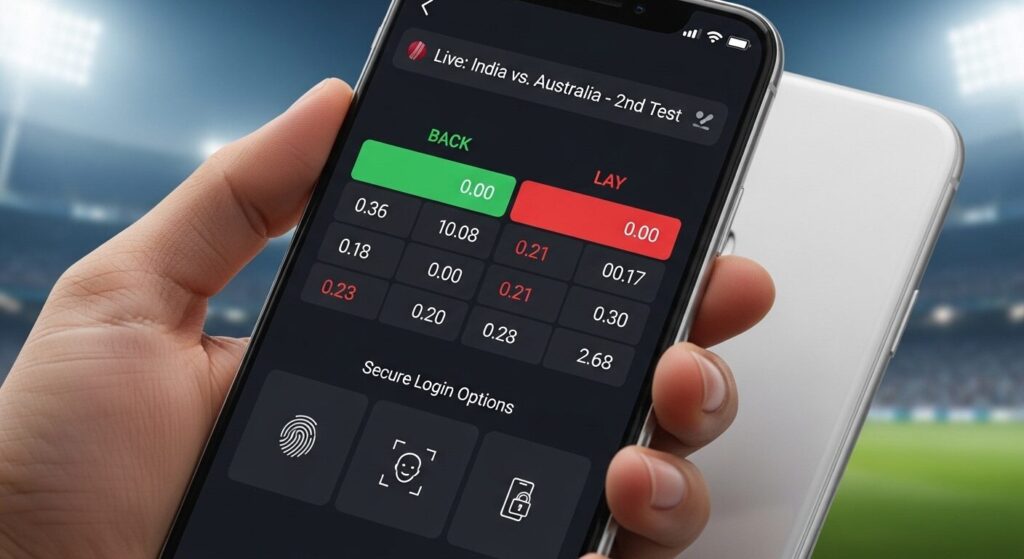
Access should stay simple and consistent. Use the official login route, keep the registered mobile number or email updated, and avoid changing core account details right before a major event. If access fails, the safer path is usually a password reset through the platform’s own recovery flow, not repeated failed attempts. Verification details should match the account holder’s information before funding, because mismatches can delay withdrawals or recovery reviews. A stable login routine is part of risk control, not just account admin.
Live Exchange Markets: In-Play Tools, Risk, and Timing
In-play markets are where discipline matters most. Prices can move in seconds, and the user who accepts every swing often pays for poor timing. A better approach is to define the entry and exit conditions before the event starts. Start with liquid matches, because thin screens punish hesitation and make exits harder. Watch spread, available volume and match state together. If the spread widens, slow down rather than taking whatever number is left. A betting exchange live routine should start with three checks: matched status, current liability and the option to cancel or amend an unmatched order. If the market suspends, the spread widens or the available volume disappears, the user should stop editing and review the position before placing another order. This keeps live decisions tied to visible market data instead of reacting to every price swing.
Use smaller test stakes before reacting to swings
A simple live rule is to decide what would make you close the position before placing it. If the match changes after a goal, injury or red card, the original plan may no longer apply. Smaller test stakes help users learn the rhythm without paying full price for every mistake. It is also better to avoid stacking several open orders on the same side unless each one is tracked. Live betting should feel like controlled execution, not a reaction to noise.
Bet exchange trading tactics that reduce emotional mistakes
The cleanest tactic is hedging: take a position, then reduce exposure if the price moves in the planned direction. The exit number should be known before confirming the entry. One planned adjustment is often better than five tiny edits, because constant tinkering invites emotional decisions. Commission should be included in the calculation, especially when the expected gain is small. If the trade cannot be explained in one sentence, it is usually better to pass.
| Pros | Cons |
| Peer-to-peer prices can be sharper than fixed lines when major markets have strong liquidity. | Thin markets can leave orders unmatched or force worse prices during time-sensitive play. |
| Back and lay flexibility allows hedging, trading and risk reduction before settlement. | New users must learn liability, commission and matched-order status before staking seriously. |
| Visible depth helps users judge whether a price is supported by real volume. | Rapid movement can trigger rushed clicks if stake, side and odds are not checked carefully. |
Betting Exchange Game Markets: Sports Types and Odds Formats
Not every market menu feels the same. The strongest lineups usually start with cricket, football and tennis because those events attract the most attention and deeper volume. Side markets such as corners, cards, player props and sessions can be useful, but spreads may widen quickly if fewer users are active. Newcomers should begin with simple match-winner style markets before exploring narrow props. A market should be avoided if its settlement rule cannot be explained in one sentence.
A betting exchange game online market should be selected only when the user can explain the settlement rule, read the odds format and see enough available volume around the target price. Narrow props, session markets and specialty events need extra care because one small liquidity change can affect both entry and exit. For beginners, match-winner markets are easier to check before moving into more detailed game markets.
Choose sports where liquidity supports the market
Cricket is often the headline sport for Indian users, but football and tennis can also attract strong volume during major events. Liquidity tends to be healthiest when the match is widely followed and information is easy to price. Wider markets need extra care because the visible odds may not represent a stable entry. Clear odds formats also matter. Decimal, fractional or American display should be switchable so the user can read prices quickly under pressure.
Use search tools to reduce market-hunting mistakes

Search and sorting are underrated. A platform should let users pin favourite events, hide markets they never use and return to the last active view without a reset. Watchlists help when two events are being monitored at once. Price alerts and quick-stake buttons can save time, but defaults must remain visible to prevent accidental over-staking. If the interface makes markets easy to find, compare and exit, the user spends more time thinking and less time hunting.
FAQ: Exchange Questions Indian Players Ask Before Joining
Is a betting exchange different from a sportsbook bet?
Yes. A sportsbook offers preset odds, while an exchange lets users take positions against other users. That means the final experience depends on available volume, matched orders and commission. The benefit is price flexibility, but the trade-off is that users must understand liquidity and liability.
What makes best star exchange popular with some players?
The phrase is often used when players compare platforms that feel quick, familiar or simple to access. Popularity usually comes from liquid sports markets, easy navigation, stable login, clear payment routes and responsive mobile controls. A platform should still be judged by rules, fees, security and withdrawal process, not by name recognition alone.
How do commissions affect long-term exchange results?
Commission reduces net winnings, so it changes the real value of close prices. A small edge can disappear if the fee is ignored. Long-term users should compare the expected profit after commission, not only the headline odds. This matters most for frequent traders and low-margin strategies.
Can an exchange account also access casino games?
Some platforms may place sports exchange tools and casino products under one account area, but the mechanics are different. Exchange markets depend on peer-to-peer matching, while casino games rely on fixed game rules and house mechanics. Users should treat them as separate products and keep limits, records and budgets separate.