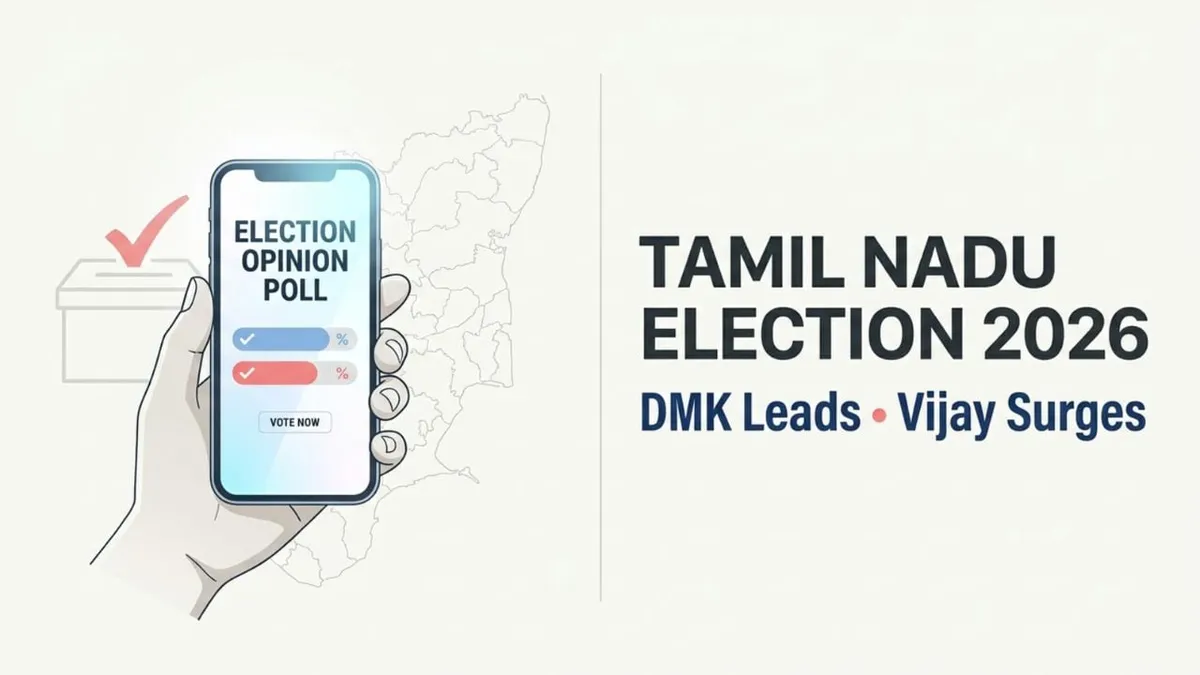
As the sun rises over Tamil Nadu, the air is thick with anticipation. The 2026 Assembly elections loom closer, and a recent Vikatan election survey reveals a rapidly evolving political landscape. On April 18, 2026, voters will head to the polls for a crucial decision that could reshape the state’s governance.
In the lead-up to this pivotal moment, the Dravida Munnetra Kazhagam (DMK) party, under the leadership of M. K. Stalin, appears poised to retain power. The survey projects that the DMK alliance is set to secure around 121 seats in the upcoming elections—a solid majority in a 234-member Legislative Assembly. This projection stems from a combination of factors: strong organizational strength and a governance model focused on welfare that has resonated with many voters.
Yet, change is in the air. Enter Vijay’s Tamilaga Vettri Kazhagam (TVK), which has emerged as a significant contender in this election cycle. “The entry of Vijay’s Tamilaga Vettri Kazhagam has significantly altered the electoral dynamics,” analysts note. With a projected vote share of approximately 24.71%, TVK is ready to make its mark, albeit it may only secure about three seats.
The AIADMK alliance, led by Edappadi K. Palaniswami, finds itself on shaky ground. The survey suggests they will capture around 83 seats—far from enough to challenge the DMK’s dominance effectively. Still, they are not without support; many loyalists remain steadfast amid fluctuating sentiments.
What complicates matters further is that over 62% of respondents indicated a desire for regime change. “Despite this desire for change, the DMK continues to maintain an advantage due to its organizational strength and vote consolidation over recent years,” observers note. This dichotomy illustrates a complex electorate—one that craves new leadership but also values stability.
The survey covered an impressive sample size of 93,600 voters across all constituencies, reflecting diverse opinions across Tamil Nadu’s varied demographic landscape. Among these voters are approximately 12.5 lakh first-time voters—an influential group whose preferences could sway results significantly.
The political environment in Tamil Nadu is entering a new phase where clear majorities can no longer be taken for granted. As parties strategize and campaigns ramp up, every rally and speech becomes critical in shaping public opinion. Details remain unconfirmed regarding last-minute shifts or surprises that could alter these projections dramatically.
As April approaches, all eyes will be on Tamil Nadu—a state rich in political history and fervor. The choices made by its electorate will not only determine their immediate future but could also signal broader trends in Indian politics as new forces challenge established parties.