FIFA’s Commercial Proposal
FIFA’s proposal to sell a minority stake in a new commercial subsidiary has drawn significant opposition from various football governing bodies. The plan involves transferring the commercial and event operations of flagship competitions, including the FIFA World Cup and Club World Cup, into a newly established company. This company would be backed by private investment, with FIFA retaining authority over governance, regulations, scheduling, and sporting decisions.
The proposed subsidiary, named FIFA Forward Enterprise, would see FIFA sell a 20% minority stake. This stake is estimated to be valued at $20 billion, which could generate approximately $4.2 billion in private investment. JPMorgan has been appointed to advise on this transaction, and the investor consortium is expected to be led by Thrive Eternal, a fund founded by Thrive Capital founder Joshua Kushner.
FIFA maintains that it would remain the majority owner of the subsidiary. The organization states that the new structure aims to generate significantly greater revenues for member associations. The proposal requires approval from FIFA’s 211 member associations to proceed.
Widespread Opposition and Boycott Considerations
The proposal has prompted strong reactions, particularly from UEFA, the Football Association (FA), and Concacaf, all of whom have questioned the process behind the plan. UEFA has accelerated plans to convene an emergency virtual meeting of its 55 member associations to discuss potential responses, including the possibility of a future World Cup boycott. Preliminary discussions have even mentioned a boycott of next year’s Women’s World Cup, though there is some reluctance to impact the women’s game due to a protest primarily concerning the men’s competitions.
UEFA issued a strong statement, describing the proposal as crossing a line that football’s governing institutions should never cross. The European governing body emphasized that the soul and governance of football are not assets to trade, especially with a lack of transparency regarding financial beneficiaries. UEFA also criticized a deadline of September 19 for associations to support the proposals or risk losing a one-off payment offer, stating that this reveals much about the plan.
The FA expressed deep concern over the lack of transparency, stating it was unaware of the proposal until media reports. Similarly, Concacaf learned of the matter through media and a subsequent public announcement, voicing disappointment over the lack of due process. The Asian Football Confederation (AFC) also issued a statement of disapproval, noting it was not consulted on the proposal despite its significance. This statement is understood to have the backing of the Saudi Arabian football federation.
Infantino’s Defense and Financial Incentives
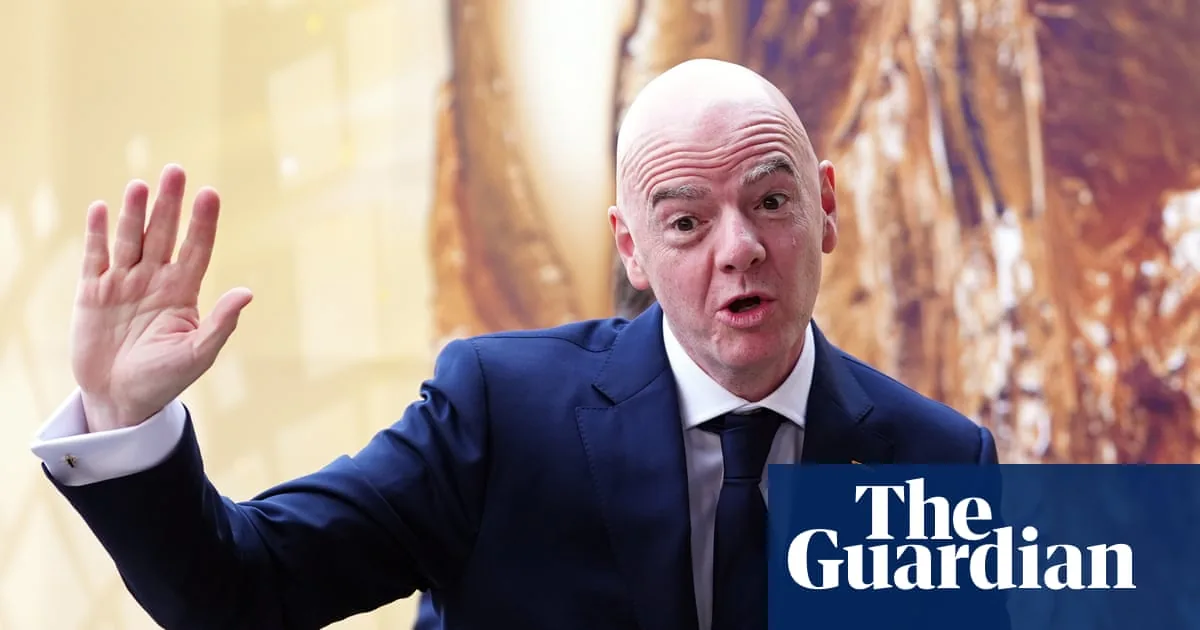
FIFA President Gianni Infantino has defended the proposal, describing it as a “singular and unique funding opportunity.” In a letter to all 211 member associations, Infantino stated that acceptance of the proposal by September 19 would unlock a $10 billion funding package starting on January 1, 2027. He highlighted that each member association could access up to $40 million during the 2027-30 cycle, comprising a one-off payment of up to $20 million through the proposed Fast Forward programme and an additional $20 million through FIFA Forward development funding.
Infantino also indicated that annual financial support to member associations would continue to increase through to 2038. He released a video addressing the backlash, calling the proposal an opportunity rather than an obligation and part of a democratic consultation process. He asserted that it is a “golden opportunity to turbocharge the development of the game globally.”
Despite Infantino’s confidence, supported by over 200 letters of endorsement for his re-election, the proposal’s passage is not guaranteed. Some sources suggest that creating a new commercial entity and selling a 20% stake would require a change to FIFA’s statutes, which necessitates a 75% majority vote, a much more challenging threshold to achieve.
Elite clubs, represented by the European Football Clubs organization, also expressed their dissatisfaction, noting that FIFA had not consulted them despite a memorandum of understanding between the two bodies. The organization learned about the proposal through media, without prior warning.
The deadline for member associations to approve the proposal is September 19.
Source: timesofindia.indiatimes.com