Confederations Oppose Investment Proposal
The Asian Football Confederation (AFC) has joined UEFA and Concacaf in rejecting FIFA‘s proposed investment plan, which involves establishing FIFA Forward Enterprise (FFE). This new commercial subsidiary would sell a minority stake in FIFA‘s commercial rights to private investors. The AFC stated that confidence in FIFA‘s governance has been undermined by the proposal.
UEFA had previously declared that its national teams would not participate in FIFA competitions as long as these proposals remain active. This position extends to both men’s and women’s World Cups. UEFA‘s vice-president, Laura McAllister, described the proposal as “catastrophic” and accused FIFA of using financial blackmail through funding packages offered to member associations that support the initiative.
The dispute has intensified, with more than 100 national associations now represented by confederations that have publicly rejected the proposal. FIFA, however, maintains that the proposal is part of an ongoing consultation process and can still be approved, amended, or rejected by member associations.
Implications for the 2030 World Cup
The ongoing dispute could have significant implications for the 2030 World Cup, which is primarily scheduled to be hosted by Spain, Portugal, and Morocco. If UEFA proceeds with its boycott, Spain and Portugal, as co-hosts, might not participate in the tournament despite staging the majority of the competition. This would mark an unprecedented situation in World Cup history, where principal host nations are absent due to a dispute between governing bodies rather than a failure to qualify.
The 2030 World Cup is also set to feature one centenary match each in Uruguay, Argentina, and Paraguay to commemorate the 100th anniversary of the inaugural FIFA World Cup. This would make it the first edition to span multiple continents.
The positions of the Confederation of African Football (CAF) and CONMEBOL, the South American governing body, on FIFA‘s investment proposal remain unclear. CAF initially indicated openness to the consultation process, while Morocco, one of the three principal hosts for 2030, has not publicly stated its stance. CONMEBOL has not taken an official position, although its president, Alejandro Domínguez, has previously supported expanding the 2030 World Cup to 64 teams.
Potential World Cup Expansion Plans
Amidst the investment proposal controversy, FIFA is also accelerating plans for a possible expansion of the 2030 World Cup from 48 to 64 teams. FIFA has initiated a tender process for research companies to assess the economic benefits of this expansion, with a short timeframe for analysis.
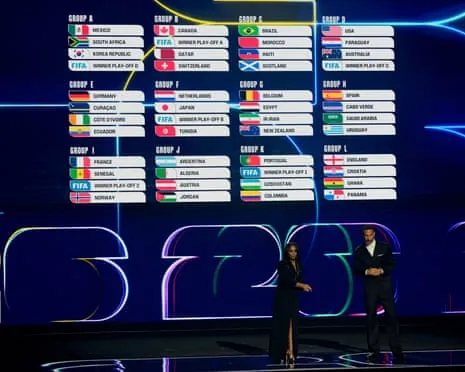
Internal documents indicate FIFA is seeking an independent assessment of the sporting, commercial, and operational consequences of a larger tournament. The governing body expects this study to be completed before member associations vote on the FFE proposal in September. If approved, the World Cup would expand to 64 teams just one edition after increasing from 32 to 48 teams in 2026.
While CONMEBOL has supported further expansion, other confederations have expressed reservations. AFC president Sheikh Salman bin Ibrahim Al Khalifa previously warned that another increase could create “chaos,” and Concacaf president Victor Montagliani questioned the benefit to the wider football ecosystem. FIFA‘s research brief for the expansion plan asks for analysis of how different stakeholders might support or resist such a move, and also requests conclusions regarding player welfare, product quality, and the international calendar.
FIFA maintains that the proposal to establish FIFA Forward Enterprise is intended to allow member associations to benefit from football’s commercial opportunities while preserving the governance of the game.
Source: timesofindia.indiatimes.com