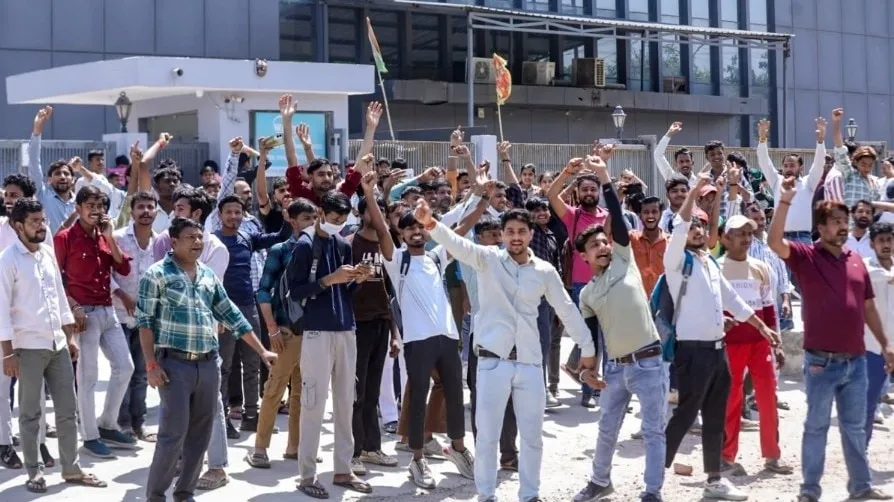
On April 13, 2026, Noida, India, was engulfed in chaos as a labour protest led to a near six-hour standstill of traffic across the city and key corridors. The protests, which began on April 9, were sparked by workers voicing their frustrations over rising living costs and stagnant wages, leading to significant disruptions in daily life.
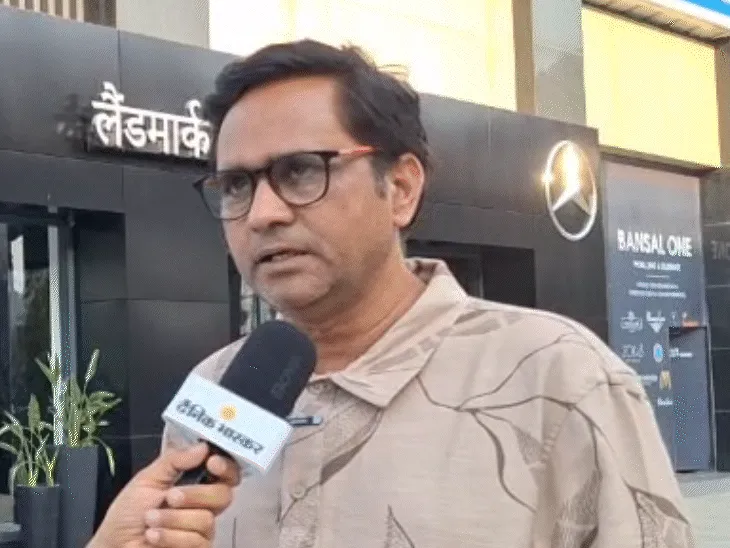
The worst affected areas included the Delhi-Noida Link Road, the DND flyway, and the Delhi-Meerut Expressway, where long tailbacks stretched for several kilometres. Commuters reported that what usually takes 45 minutes to drive from Indirapuram to Okhla turned into a grueling two-and-a-half-hour ordeal. Neha Gupta, a frustrated commuter, shared her experience: “There was no proper advisory in the morning. By the time we realised what was happening, we were already stuck in the middle of it.” The Delhi Traffic Police issued its first advisory at 11:48 am, but the situation had already escalated by then.
As the protests unfolded, the Local Intelligence Unit of the Noida Police faced criticism for failing to provide timely intelligence, which contributed to the breakdown of law and order. The protests not only caused traffic disruptions but also resulted in vandalism across 80 factories in Greater Noida and Noida, further exacerbating the situation. Adequate police deployment had been ensured following earlier disruptions, but the scale of the protests caught many off guard.
Uttar Pradesh Labour Minister Anil Rajbhar characterized the protests as part of a “larger conspiracy,” suggesting a possible link to external forces. He stated, “Forces troubled by the growing popularity of the double-engine government are conspiring to create instability.” This statement raised eyebrows and led to speculation about the motivations behind the protests, although details remain unconfirmed. Rajbhar urged the public to remain calm, advising them not to fall prey to misleading information or provocation.
The protests had a ripple effect, impacting school operations in both Delhi and Noida, as parents struggled to navigate the congested roads. By mid-afternoon, the situation began to ease, with traffic normalizing approximately 1.5 hours after the protests peaked. However, the aftermath of the protests left many questioning the effectiveness of the police and administrative responses.
As the dust settles on the events of April 13, the community remains on edge, grappling with the implications of the protests. The rising living costs and stagnant wages that sparked the unrest are issues that resonate deeply with many workers in the region. The protests have highlighted the urgent need for dialogue between the government and labor representatives to address these pressing concerns.
In the wake of the protests, officials are expected to review the events leading up to the disruption and assess how similar situations can be avoided in the future. The local government, led by Chief Minister Yogi Adityanath, faces mounting pressure to respond effectively to the grievances of the workers while maintaining public order. As Noida continues to navigate the aftermath of this significant event, the community watches closely for any signs of resolution or further unrest.