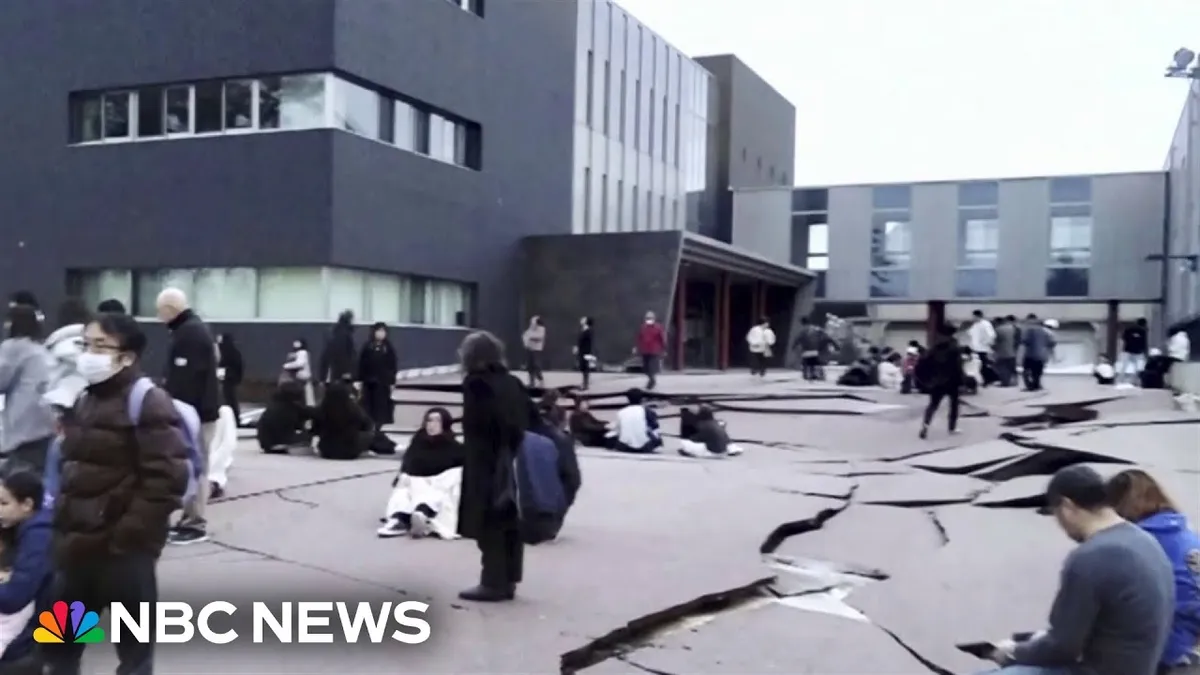
On April 20, 2026, a magnitude 7.7 earthquake struck off Japan’s northern coast at precisely 4:53 PM local time. The tremor sent shockwaves through coastal communities, leading the Japan Meteorological Agency to issue urgent warnings for potential tsunamis.
Tsunami waves as high as 80 centimeters were detected shortly after the quake, raising alarms about possible waves reaching up to three meters high. This prompted officials to act swiftly—”Evacuate immediately from coastal regions and riverside areas to a safer place such as high ground or an evacuation building,” they urged.
Prime Minister Sanae Takaichi echoed this sentiment, stating, “For those of you who live in areas for which the warnings have been issued, please evacuate to higher, safer places such as higher ground.” The gravity of these directives was underscored by Japan’s historical context; memories of the catastrophic magnitude 9 earthquake and tsunami in 2011 linger painfully in the national consciousness.
In that disaster, approximately 18,500 lives were lost, along with the onset of the Fukushima nuclear crisis. Now, with around 1,500 earthquakes occurring each year in Japan—accounting for nearly 18 percent of the world’s seismic activity—the threat remains ever-present.
The recent earthquake has added urgency to ongoing discussions about preparedness and response strategies. Authorities have issued a special advisory warning of an increased risk of future earthquakes at a magnitude of 8.0 or stronger.
As night fell after the quake, details remained unconfirmed regarding casualties or property damage. However, there were no immediate signs of damage reported at several ports in Iwate.
While Japan’s infrastructure is renowned for its resilience against seismic events, the psychological impact on residents cannot be underestimated. Each tremor serves as a reminder of the fragility of safety in this seismically active region.
As communities begin to assess the situation and recover from this latest quake, attention will turn toward understanding its implications and preparing for what might come next. The uncertainty lingers—what will this mean for Japan’s future seismic safety protocols?