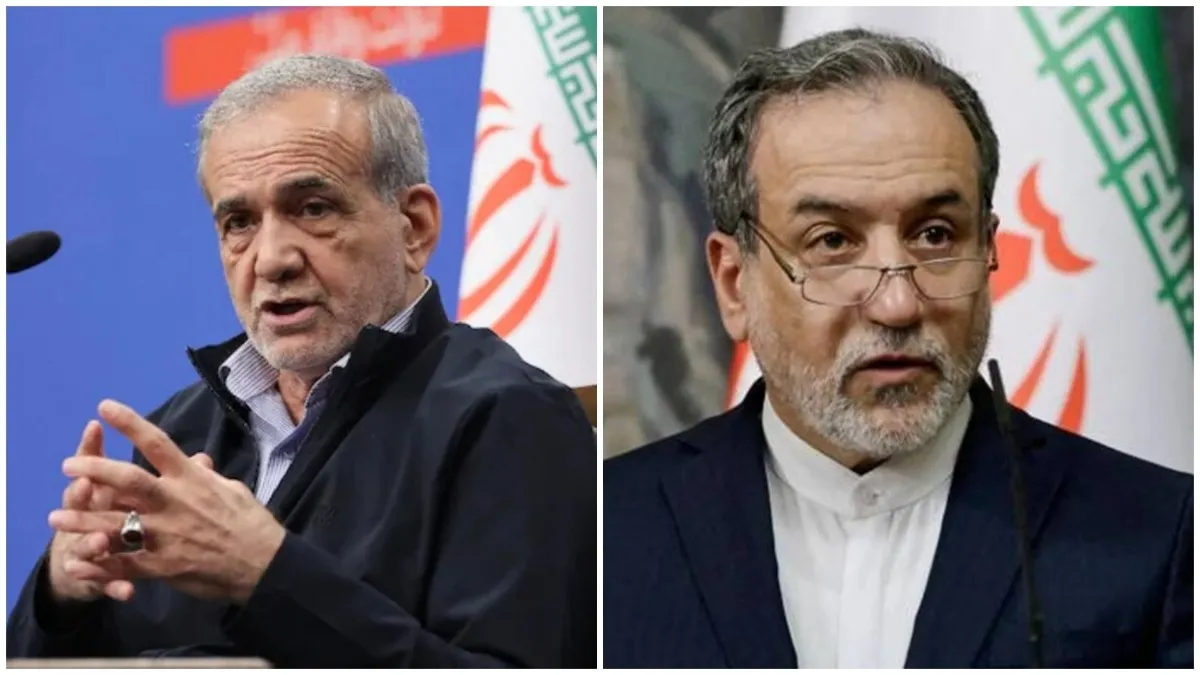
“Pezeshkian has told close associates that he will dismiss Araghchi if such conduct continues,” a source close to President Masoud Pezeshkian revealed, highlighting the growing tensions within Iran’s leadership.
As of May 1, 2026, Foreign Minister Abbas Araghchi finds himself at the center of a political storm. Accusations of his alignment with Revolutionary Guard Commander Ahmad Vahidi have sparked efforts for his removal. Pezeshkian and Parliament Speaker Mohammad Bagher Ghalibaf are leading the charge against him, citing frustrations over his handling of crucial US negotiations.
Araghchi’s recent actions have raised eyebrows. He coordinated directly with Vahidi without informing Pezeshkian, a move that many see as undermining the cabinet’s unity. “He’s acted more like an aide to Vahidi than a cabinet minister,” Ghalibaf reportedly said, reflecting the sentiment among hardliners who oppose Araghchi’s approach.
These divisions within Iran’s leadership aren’t new; they echo past disagreements that emerged on March 28. Recently, Ghalibaf resigned from the negotiating team after being reprimanded for including nuclear discussions in talks with the US—an indication of the fraught atmosphere surrounding Iran’s foreign policy.
On April 24, Araghchi traveled alone to Islamabad to deliver Tehran’s proposal to Pakistani officials. However, this initiative was met with disappointment when the United States president rejected it outright. The internal rifts only deepened as a group of lawmakers aligned with hardline politician Saeed Jalili refused to support the negotiating team.
The Revolutionary Guards are reportedly consolidating power in key managerial positions due to this critical situation, further complicating Araghchi’s position. Yet he remains optimistic about regional partnerships. “Cooperation between Iran and Russia continues to expand amid regional uncertainty,” he stated, emphasizing a commitment to strengthening ties despite domestic challenges.
Russian Foreign Minister Sergey Lavrov described a recent meeting as constructive and practical—an attempt perhaps to stabilize relations amid rising tensions. But with internal disputes raging, how long can these diplomatic efforts last?
The next steps in this unfolding drama remain uncertain. With calls for Araghchi’s dismissal growing louder, all eyes will be on how Iran navigates its complex web of foreign relations and internal politics.