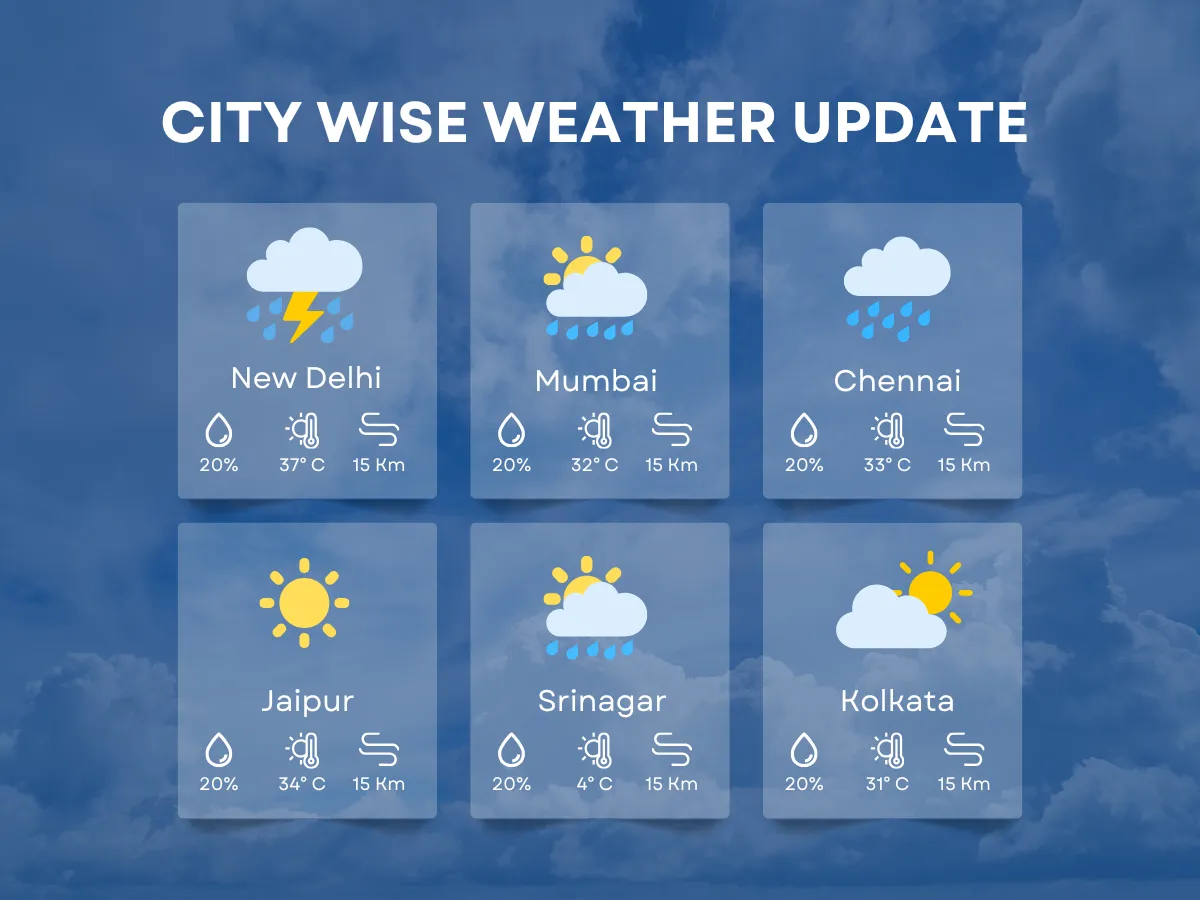
On March 23, 2026, Jaipur witnessed a significant shift in weather as several areas experienced rainfall, transforming the previously warm conditions into a more pleasant climate. This change has not only provided relief to residents but has also raised concerns regarding the impact on local agriculture.
The India Meteorological Department (IMD) had issued a nationwide weather alert, forecasting widespread thunderstorms, rainfall, lightning, and gusty winds across various regions. This alert was particularly pertinent for eastern Uttar Pradesh, Bihar, Jharkhand, Chhattisgarh, Odisha, and parts of West Bengal, where an ‘Orange Alert’ was declared due to the anticipated severe weather conditions.
In response to the heavy rainfall, Rajasthan Chief Minister Bhajanlal Sharma emphasized the importance of assessing the impact on agriculture, instructing district collectors to conduct immediate surveys to evaluate crop damage. He stated, “The prosperity of Rajasthan rests on the foundation of our farmer brothers and sisters. The state government stands firmly with you with complete sensitivity and responsibility.” This statement underscores the government’s commitment to supporting farmers affected by the adverse weather.
As the rain activity continued, it was noted that the maximum temperature in Rajasthan had dropped significantly, with Barmer recording a high of 35.2 degrees Celsius just a day prior. The rainfall not only provided a respite from the heat but also raised humidity levels, which could affect air quality in the region.
Weather experts, including Akhil Shrivastava from the IMD, reported that large-scale thunderstorm activity was being observed across India, with wind speeds in eastern India potentially reaching 60 to 70 kmph, posing risks to safety and infrastructure. The IMD also indicated that rainfall activity in Delhi led to a notable drop in maximum temperatures, although this activity was expected to subside starting March 24.
Looking ahead, light rain with thunderstorms is anticipated in the Shekhawati region on March 25, which may further influence local weather patterns and agricultural conditions. As the situation develops, the full extent of the rainfall’s impact on crops and the community remains to be seen.
Details remain unconfirmed regarding the overall damage assessment and the long-term implications of this weather event on Jaipur’s agriculture and economy. However, the immediate response from local authorities indicates a proactive approach to mitigate the effects of this unexpected weather change.