Who is involved
In Kolkata, the electoral landscape has recently been marred by significant challenges as several lakhs of electors found themselves unable to access the first supplementary voter list. This situation has led to widespread anxiety among the electorate, particularly among those who had submitted their documents in hopes of securing their voting rights. The expectation was that the supplementary list would provide clarity and assurance, but for many, it has only deepened their concerns.
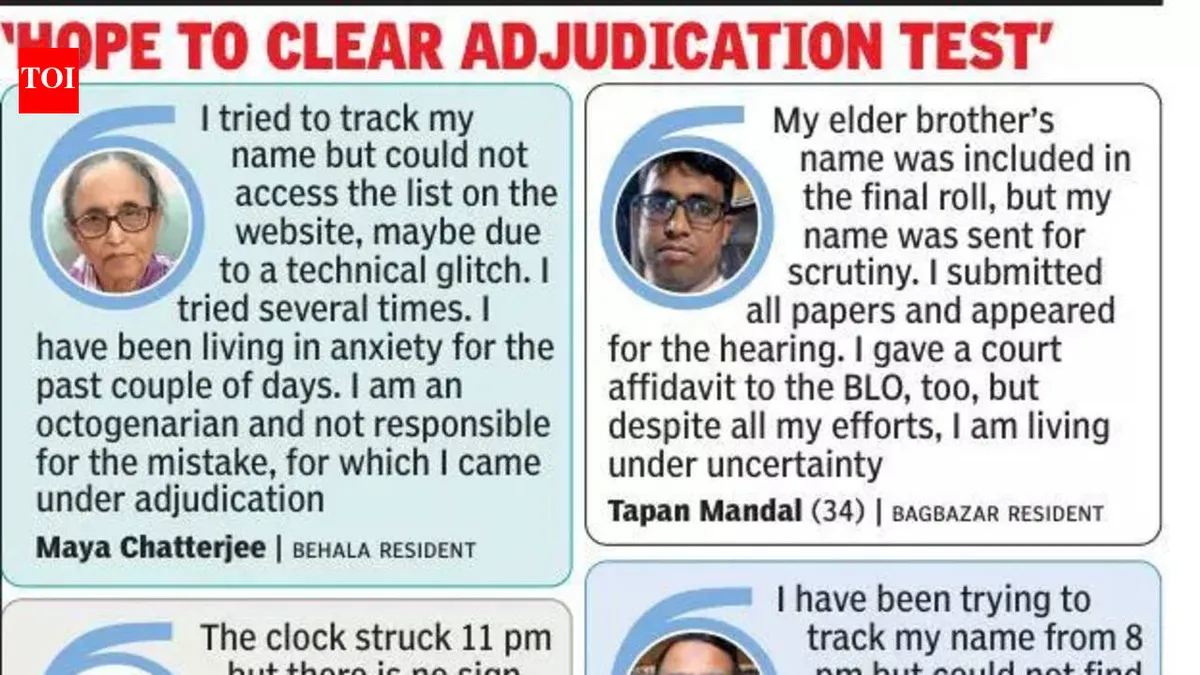
The decisive moment came when the chief electoral officer announced that the supplementary list would be available after 9 pm. This announcement, however, did little to alleviate the fears of electors like Maya Chatterjee, an octogenarian who expressed her frustration, stating, “I tried to track my name but could not access the supplementary list on the website, maybe due to a technical glitch.” Her sentiment was echoed by many others who had hoped to confirm their voting eligibility.
Among those affected was Shah Umayer Ahamed, whose mother, Arafatun Nesa, remained under the ‘adjudication’ category despite having submitted all necessary documents. This situation highlights a troubling trend where individuals who have complied with the requirements still find themselves in limbo. Tapan Mandal, another voter, faced a similar predicament when his name was sent for final scrutiny due to a discrepancy in surname records, further complicating his ability to vote.
The emotional toll of this uncertainty is palpable. Soumik Bhattacharya, a heart patient, waited until midnight for the supplementary list but was left disappointed and frustrated. He questioned the timing of the announcement, asking, “Was it a joke that the first supplementary list would be out post 9 pm?” His experience underscores the urgency and importance of timely access to voter information.
Researcher Sabir Ahamed also faced challenges, as his father was marked under adjudication and could not find his name on the website. Musa Kalim Molla, another concerned voter, expressed his worry, stating, “I am worried. When I submitted my voter ID number, it was showing under adjudication.” This collective anxiety reflects a broader issue within the electoral process that demands immediate attention.
In response to these challenges, the electoral authorities have made provisions for voters who do not possess an accepted photo ID, allowing them to apply for Voter Authority Certificates. Accepted forms of photo ID include passports, driving licenses, and Blue Badges. However, the effectiveness of these measures remains to be seen, as many voters are still grappling with the basic issue of accessing their names on the voter list.
The implications of this crisis extend beyond individual frustrations; they raise critical questions about the integrity and accessibility of the electoral process in Kolkata. As the local elections approach, the urgency for a resolution becomes paramount. Experts argue that ensuring voter access is fundamental to a functioning democracy, and the current situation calls for immediate action to restore confidence among the electorate.
Details remain unconfirmed regarding the exact number of voters affected and the measures being implemented to rectify the situation. However, the voices of those like Maya Chatterjee and Shah Umayer Ahamed serve as a poignant reminder of the stakes involved in the electoral process and the need for transparency and efficiency in managing voter registrations and lists.