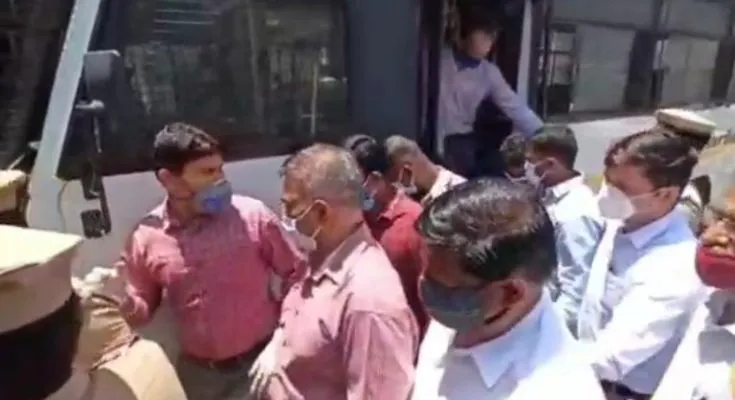
The Sathankulam case, which began during the COVID-19 pandemic lockdown in June 2020, has long been a focal point for discussions on police brutality in India. Before the recent judgement delivered on March 23, 2026, the expectation was that justice for Jayaraj and Bennix, who died due to custodial violence, would be a long and arduous journey. Their deaths had sparked widespread protests and condemnation, highlighting the urgent need for reform in law enforcement practices.
However, a decisive moment arrived when the First Additional District and Sessions Court in Madurai found all nine police officers accused in the case guilty. This verdict marked a significant shift in the narrative surrounding custodial violence, as it underscored the judiciary’s role in holding law enforcement accountable. The court’s ruling concluded that the injuries inflicted on Jayaraj and Bennix were unnatural and directly caused their deaths, rejecting the defense’s claim that the injuries were self-inflicted.
The immediate aftermath of the judgement has profound implications for the parties involved. The guilty verdict for the police officers, including Inspector S. Sridhar and Sub-Inspectors P. Raghu Ganesh and K. Balakrishnan, has reignited discussions on police accountability and the need for systemic changes within the force. Sentencing for these officers is scheduled for March 30, 2026, a date that will be closely watched by advocates for justice.
Expert voices have weighed in on the significance of this case. Judge G. Muthukumaran stated, “The injuries inflicted on Jayaraj and Bennix were unnatural, which ultimately caused their death.” This statement not only reinforces the court’s findings but also reflects a growing recognition of the need for accountability in cases of police misconduct.
The trial, which lasted nearly six years and involved the examination of over 100 witnesses, has drawn national attention to the issue of custodial violence. The Madurai bench of the Madras High Court had previously taken suo motu cognizance of the case, directing a judicial inquiry and transferring the investigation to the Central Bureau of Investigation at the request of the Director General of Police.
As the nation reflects on the implications of the Sathankulam case judgement, it serves as a reminder that justice delayed is justice denied. The High Court’s assertion that “justice hurried is justice buried” resonates deeply in this context, emphasizing the delicate balance between thorough investigation and timely justice.
The case has not only highlighted the tragic deaths of two individuals but has also sparked a broader conversation about the need for reform in policing practices across India. The outcome of this case could set a precedent for future cases involving custodial violence, potentially leading to significant changes in how law enforcement agencies operate.
As the sentencing date approaches, the nation watches closely, hopeful that this judgement will pave the way for greater accountability and reform in the police system, ensuring that such tragedies do not occur again.