In recent years, the tech industry has seen a significant shift in expectations regarding artificial intelligence (AI). Previously, many viewed AI primarily as a tool for automation, often relegated to the realm of chatbots and simple task execution. However, this perception has evolved dramatically, especially with the insights from Salesforce CEO Marc Benioff.
Benioff recently stated that AI-powered coding tools are not just enhancing productivity but also reducing the need for hiring additional engineers. This decisive moment in AI application was underscored by a staggering 282% increase in Salesforce’s AI implementation in 2025, which reflects a deeper embedding of AI into the company’s core operations.
The immediate effects of this shift are notable. Salesforce’s innovative approach, termed Enterprise General Intelligence (EGI), aims to operationalize AI across various business workflows. As a result, 91% of Indian sales professionals now regard AI agents as critical to achieving business success, according to Salesforce’s State of Sales data.
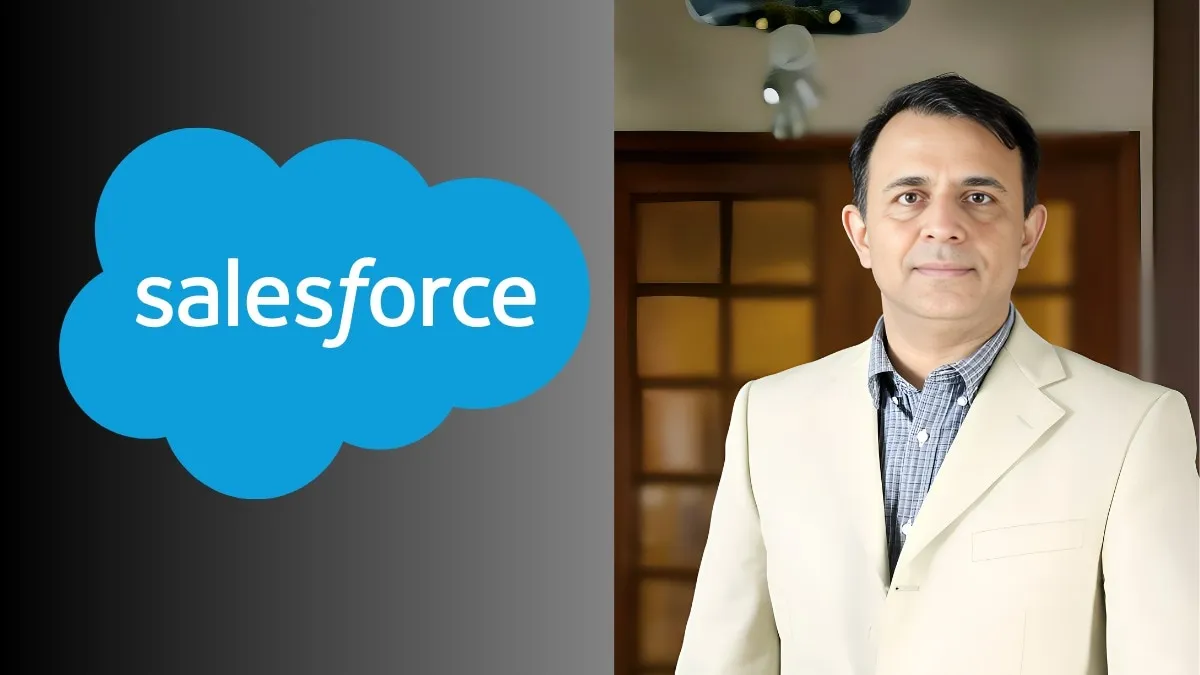
Deepak Pargaonkar, an expert in the field, emphasized that AI agents are only as intelligent as the unified, real-time information they draw from. This highlights the importance of data quality in maximizing AI’s potential. Pargaonkar remarked, “These aren’t experiments anymore, they’re augmenting human judgment in real workflows,” indicating a shift from theoretical applications to practical implementations.
In contrast, Oracle CEO Mike Sicilia has a different perspective on the role of AI in the industry. He asserted that AI tools will not lead to the demise of traditional software companies, suggesting a coexistence of old and new technologies. Sicilia further noted, “AI is not here to replace expertise – it’s here to elevate it by taking on the invisible complexity underneath ideas like analysis coordination and prediction.” This perspective underscores the collaborative potential of AI in enhancing human capabilities.
As Salesforce continues to innovate, its Agentforce ecosystem now includes nearly 800 reusable agent assets from over 160 partners, showcasing the collaborative nature of AI development. Meanwhile, Oracle is working towards building the world’s largest AI cloud, with 22 new AI-driven Fusion Applications recently announced.
Overall, the transition from basic AI applications to more sophisticated, autonomous systems is reshaping hiring practices, workflows, and decision-making processes across industries. As companies like Salesforce and Oracle lead the charge, the future of AI in business looks promising, albeit with the need for careful integration and customization.