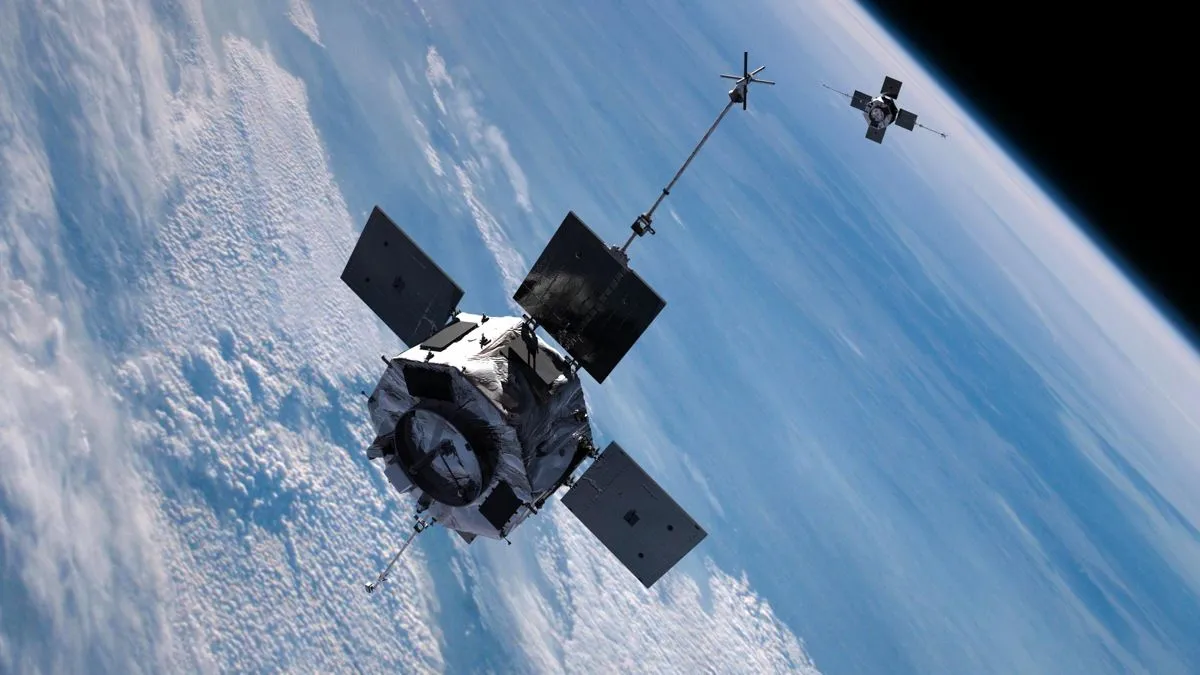
NASA Satellite Crashing: Van Allen Probe A Returns to Earth
The Van Allen Probes, originally known as the Radiation Belt Storm Probes, were launched in August 2012 to study the radiation belts surrounding Earth. Designed for a two-year mission, the probes continued to operate until 2019, collecting valuable data about space weather and its effects on satellites, astronauts, and terrestrial systems such as communications and power grids. After nearly 14 years in orbit, the Van Allen Probe A made its reentry into Earth’s atmosphere at 6:37 a.m. EDT on March 11, 2026.
NASA and the U.S. Space Force closely monitored the reentry of the Van Allen Probe A, which weighed 1,323 pounds (600 kilograms). The satellite was expected to burn up mostly during its descent, although some components may have survived the reentry process. NASA officials stated, “NASA expected most of the spacecraft to burn up as it traveled through the atmosphere, but some components may have survived reentry.”
Prior to its reentry, there was a calculated 1-in-4,200 chance that the satellite could cause harm to anyone on the ground. NASA officials reassured the public, saying, “There’s just a 1-in-4,200 chance that Van Allen Probe A will hurt anyone during its reentry.” This low probability reflects the vast areas of uninhabited land and ocean that cover approximately 70% of the Earth’s surface.
The satellite’s mission was significant for understanding the dynamics of the Earth’s radiation belts, which play a crucial role in predicting how solar activity impacts various systems. As noted by NASA officials, “By reviewing archived data from the mission, scientists study the radiation belts surrounding Earth, which are key to predicting how solar activity impacts satellites, astronauts, and even systems on Earth such as communications, navigation and power grids.”
Both Van Allen Probes were deactivated in 2019, but their contributions to space science continue to be relevant. The original expectation was that the satellite would reenter Earth’s atmosphere around 2034, but increased solar activity accelerated its descent, leading to the earlier reentry.
Experts in the field have commented on the nature of satellite re-entries, indicating that they are fairly common occurrences. They emphasize that such events rarely pose any real danger to people on Earth. As one expert stated, “Experts say satellite re-entries are fairly common and rarely pose any real danger to people on Earth.” This perspective helps to alleviate concerns regarding the safety of satellite reentries.
As the space community reflects on the mission of the Van Allen Probes, the data collected will continue to inform future research and enhance our understanding of space weather phenomena. The successful monitoring of the satellite’s reentry by NASA and the U.S. Space Force demonstrates the ongoing commitment to ensuring public safety during such events. Observers will continue to analyze the implications of the satellite’s findings for future missions and the ongoing study of Earth’s radiation environment.