Did Mirra Andreeva’s emotional response overshadow her performance at the Indian Wells Open 2026?
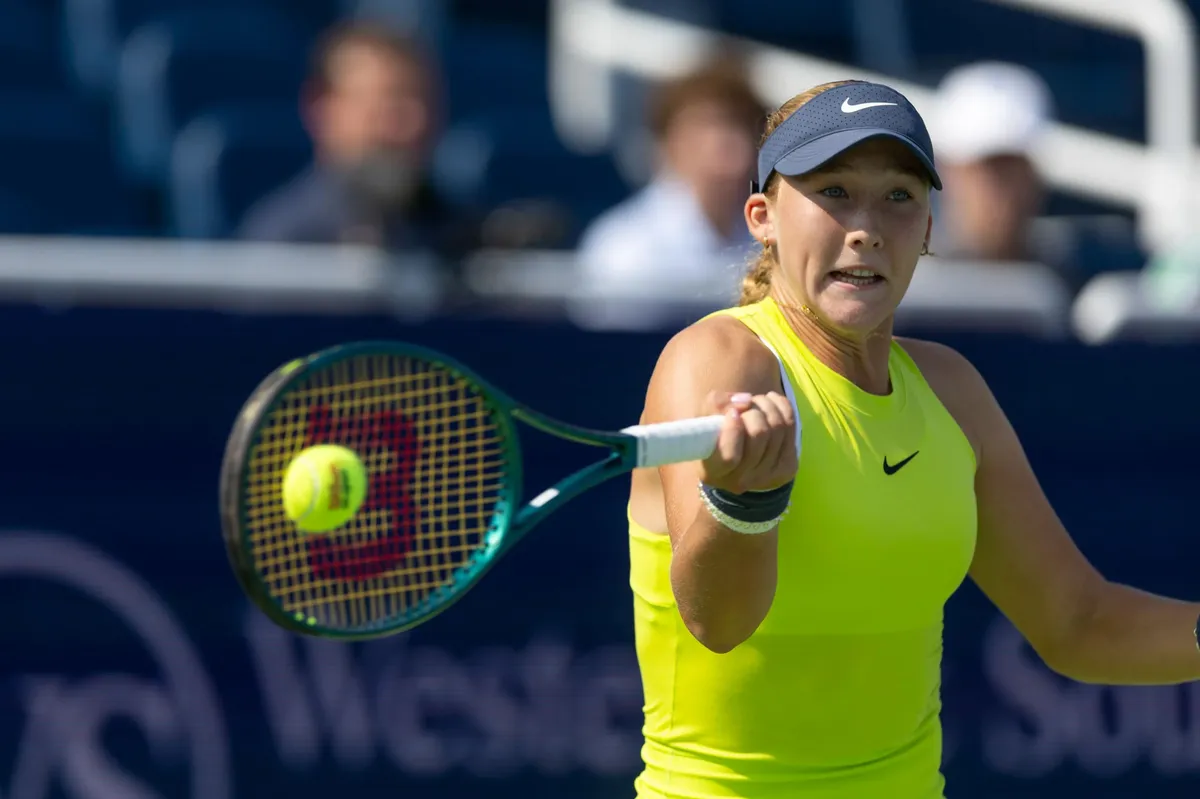
Mirra Andreeva’s recent match against Katerina Siniakova in the third round of the Indian Wells Open 2026 has raised questions about her emotional control on the court. After a hard-fought battle that lasted two hours and 48 minutes, Andreeva ultimately succumbed to Siniakova with a score of 4-6, 7-6(5), 6-3.
The match was marked by intense competition, featuring a staggering 42 break-point opportunities. Andreeva created 26 break points, converting seven of them, showcasing her aggressive playstyle. However, her emotional response post-match was notable; she smashed her racket multiple times and reportedly yelled, “F*** you all” at the crowd, indicating her frustration and disappointment.
At just 18 years old, Andreeva is still in the early stages of her professional career. Prior to facing Siniakova, she had a commanding victory over Solana Sierra, winning her opening match 6-0, 6-0. This initial success had set high expectations for her performance in the tournament, making her subsequent loss even more striking.
Andreeva’s emotional outburst has drawn mixed reactions from fans and commentators alike. Some empathized with her, suggesting that the pressure of competition can be overwhelming for young athletes. One commentator noted, “Kid is feeling the pressure. Unless you’ve been there, no need to criticize her.” This sentiment reflects a growing understanding of the mental challenges faced by athletes, particularly those at the beginning of their careers.
Despite the defeat in singles, Andreeva remains in contention in the women’s doubles event at Indian Wells, partnering with Victoria Mboko. The duo has advanced to the quarterfinals after defeating Jelena Ostapenko and Hailey Baptiste, indicating that Andreeva’s competitive spirit is still very much alive.
Looking ahead, Andreeva and Mboko are set to face Anna Danilina and Aleksandra Krunic on March 11. This upcoming match will be crucial for Andreeva as she seeks to regain her composure and channel her emotions into a more positive performance.
Andreeva’s admission of struggling to control her emotions after the loss highlights the importance of mental resilience in sports. She stated, “There were a lot of emotions that I was going through after the loss,” and further expressed, “I’m not really proud of how I managed it. I’m not really proud of how I handled it in the end.” These reflections may serve as a pivotal learning experience for her as she continues to develop her career.
As the tournament progresses, the tennis community will be watching closely to see how Andreeva navigates the challenges ahead, both on and off the court. Details remain unconfirmed regarding her strategies for emotional management in future matches.