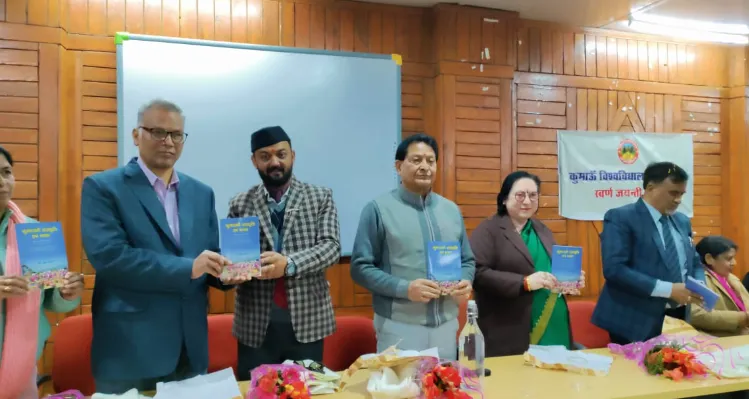
Kumaun University, located in Nainital, has recently appointed Nandan Singh Bisht as the deputy controller of examinations, marking a pivotal moment in the institution’s commitment to academic rigor. This appointment comes alongside the university’s approval of a comprehensive screening system aimed at enhancing faculty evaluation.
The new faculty evaluation system employs a 100-point scale, with clear benchmarks set for performance. Teachers who score below 60 percent will face significant consequences, including withheld salary increases and potential compulsory retirement. Conversely, those who achieve above 75 percent will be rewarded with a certificate of appreciation, fostering a culture of excellence.
In addition to these measures, each faculty member is now required to present at least once at a national or international conference, reflecting a push towards greater engagement in the academic community. Stricter criteria have also been established for higher research degrees such as D Sc. and DLitt, indicating a robust framework for academic advancement.
During a recent meeting, the university also approved the promotion of seven teachers under the Career Advancement Scheme, further demonstrating its commitment to recognizing and rewarding faculty contributions. Diwan Singh Rawat, a key figure in this initiative, stated, “These decisions taken as a whole, represent an important initiative toward strengthening academic excellence, research quality, transparency and accountability at the university.”
The backdrop of these developments is significant, as Uttarakhand is home to a multiethnic population, with a considerable portion belonging to Scheduled Castes and Scheduled Tribes. This diversity adds layers of complexity to the educational landscape, making the university’s efforts to enhance academic standards all the more crucial.
As Kumaun University embarks on this new chapter, the reactions from faculty and students alike will be closely monitored. The implementation of these rigorous evaluation standards is expected to spark discussions about the balance between accountability and support within the academic environment.
While the university’s intentions are clear, the effectiveness of these measures in fostering a culture of excellence remains to be seen. Details remain unconfirmed regarding how these changes will be received by the broader academic community.