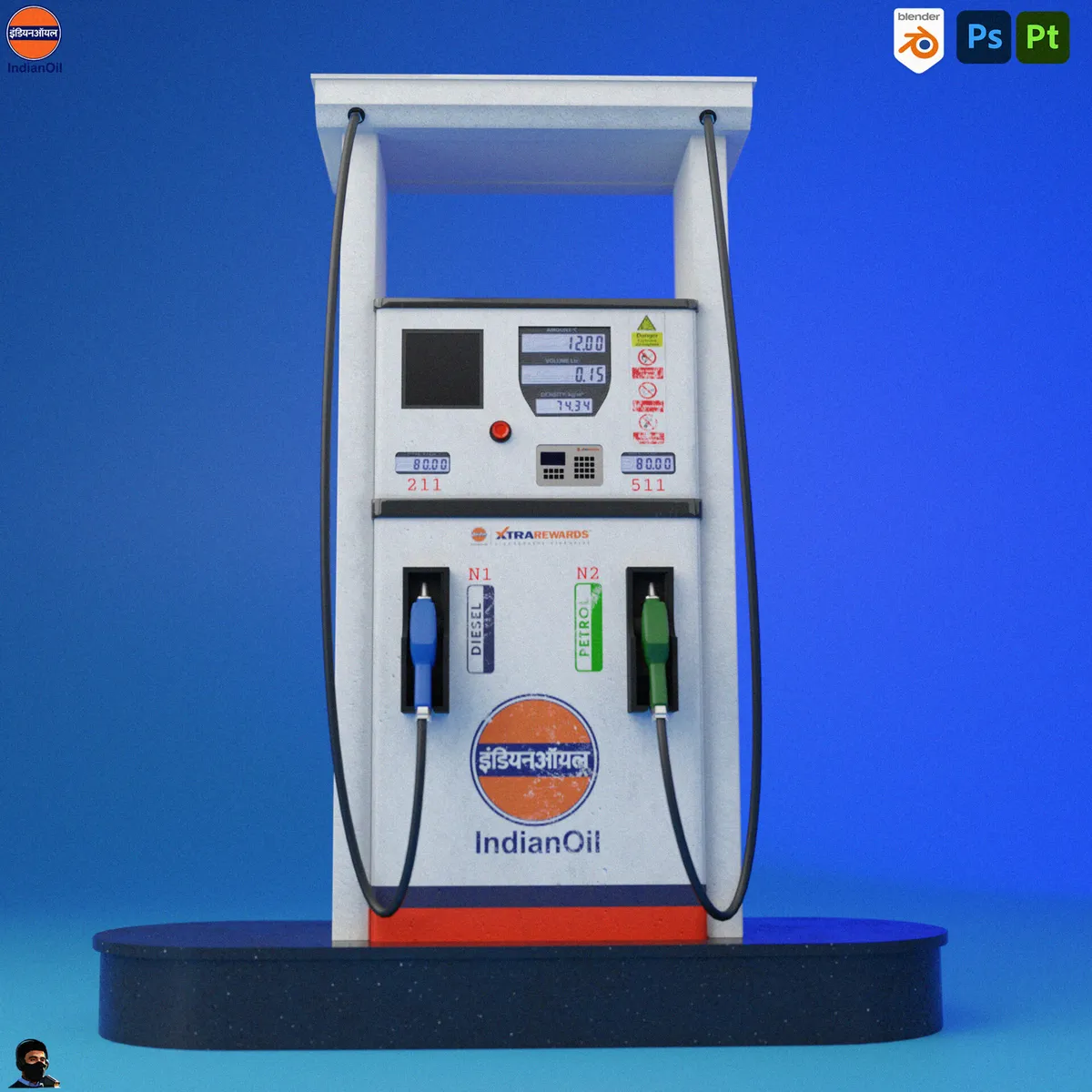
India, the world’s third-largest consumer of crude oil, imports around 85 percent of its requirements. In a recent development, IndianOil Corporation has increased the price of its premium petrol product, XP-95, by ₹2 per litre. This adjustment comes at a time when international crude oil costs have nearly doubled, soaring from US$71 to US$156 per barrel in just 20 days.
Despite this increase in premium petrol prices, standard petrol and diesel prices in India remain unchanged. XP-95 accounts for approximately 5 percent of total petrol sales in the country, indicating that the impact of this price hike may be limited to a niche market segment.
IndianOil serves a staggering 3.2 crore customers daily and refills over 27 lakh LPG cylinders, highlighting its significant role in the Indian energy landscape. Additionally, the company fuels over 2,800 flights at 130 airports across the nation.
As of March 20, 2026, IndianOil’s market capitalization stands at ₹2,04,193 Crore, reflecting its robust position in the market. The company’s recent financial performance has also been noteworthy, with a Q3 standalone net profit of ₹12,126 Crore, marking a remarkable 322% year-on-year increase from ₹2,874 Crore.
In response to the recent price adjustments, IndianOil has reassured the public that there is no shortage of petrol or diesel in the country. An official statement from the corporation emphasized, “There is no shortage of petrol or diesel in the country: Indian Oil Corporation.” This sentiment was echoed by Arvinder Singh Sahney, who stated, “IndianOil outlets across the country are well-stocked and functioning normally.”
Furthermore, Sahney cautioned against the spread of unverified rumors, which can lead to unnecessary panic and disrupt supply. He urged the public to avoid panic buying and rely only on official information.
As the energy market continues to fluctuate, observers are keenly watching how IndianOil and other players in the sector will respond to ongoing changes in crude oil prices. The situation remains dynamic, and further developments are anticipated in the coming weeks.