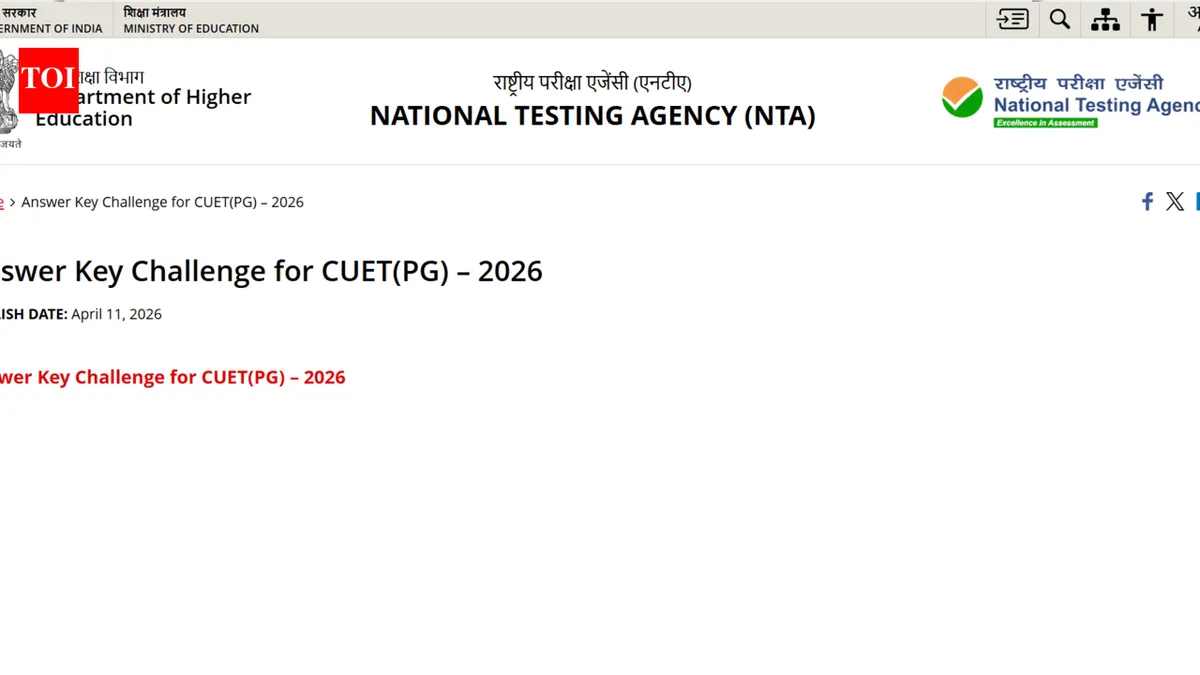
The release of the CUET PG 2026 answer key and response sheet marks a crucial moment for thousands of aspiring graduate students in India. This pivotal event not only determines the immediate academic futures of candidates but also sets the stage for subsequent admissions to prestigious institutions like Jawaharlal Nehru University (JNU). With the challenge window for objections open from April 11 to April 14, 2026, candidates are urged to scrutinize their results closely, as the final answer key will be binding and will significantly influence cut-off scores.
The stakes are high, as the CUET PG exam serves as a gateway to various postgraduate programs across the country. The safe scores, which provide an estimated range for cut-off marks, have been outlined for different categories: a safe score of 210-230 for General candidates, 200-220 for OBC, 180-200 for SC, and 160-180 for ST candidates. These figures are critical for students as they navigate their options for further education.
As the academic year 2026-27 approaches, JNU has announced that admissions will commence only after the CUET PG results are declared. This creates a sense of urgency among candidates, as they must ensure they have appeared for the CUET PG 2026 to be eligible for JNU admissions. The university’s emphasis on the CUET PG results underscores the exam’s importance in the broader landscape of higher education in India.
Moreover, specific programs, such as the MSc in Biotechnology, will base admissions on the GAT-B score, further complicating the admissions process for students. This highlights the need for candidates to not only perform well in the CUET PG but also to be aware of the distinct requirements of various programs they wish to pursue.
As the challenge window for objections approaches, candidates are reminded that the objection fee is set at ₹200 per question, a non-refundable amount that could weigh heavily on students’ minds as they consider disputing any discrepancies in their scores. This fee structure adds another layer of financial consideration for students already facing the pressures of exam preparation and future planning.
The implications of the CUET PG 2026 extend beyond immediate admissions; they reflect broader trends in India’s education system, where standardized testing increasingly dictates access to higher education. As institutions adapt to these changes, students must remain vigilant and proactive in understanding their rights and options within this framework.
Looking ahead, the outcomes of the CUET PG 2026 will undoubtedly shape the academic paths of countless students. With the final answer key and subsequent results looming, candidates are left to navigate a landscape filled with both opportunity and uncertainty. Details remain unconfirmed, but the anticipation surrounding the exam’s results continues to build as students prepare for the next steps in their educational journeys.