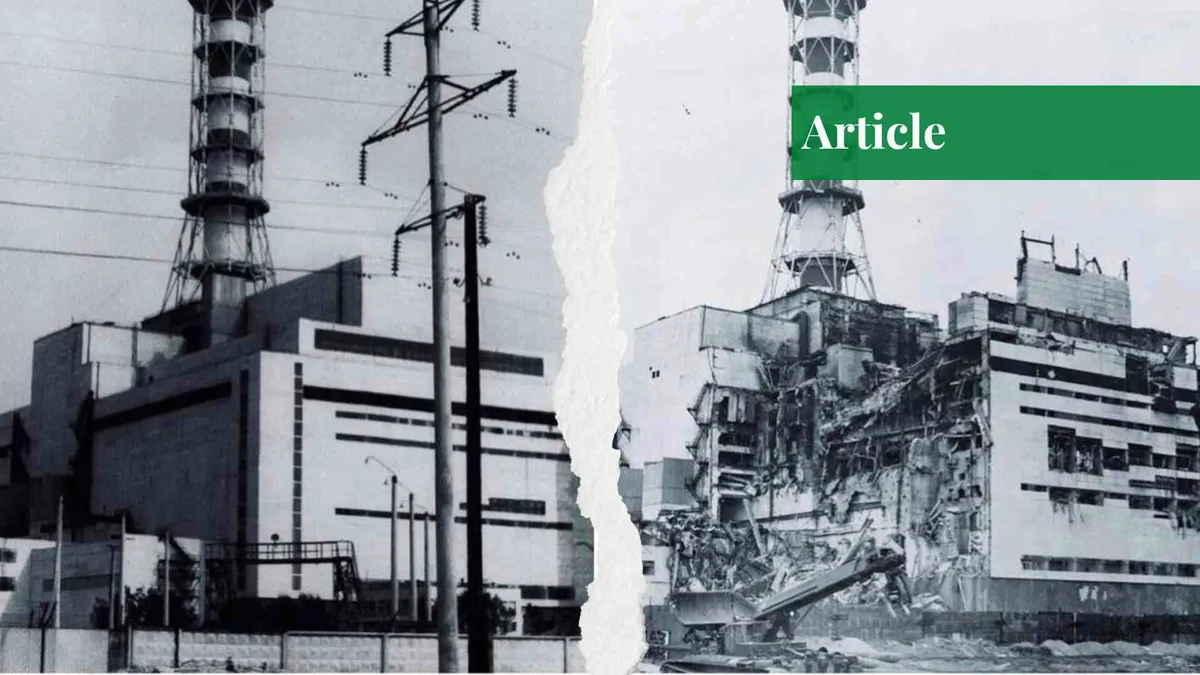
The Lasting Impact of Chernobyl
The Chernobyl disaster, which occurred in 1986, is considered one of the worst nuclear disasters in history. Its repercussions are still felt today, particularly in the life of Oksana Masters, who was born with several birth defects linked to radiation exposure from her birth mother’s proximity to the site of the disaster.
Oksana Masters was born with six toes, webbed hands, and missing several organs, including one kidney. These conditions are attributed to the radiation that permeated the area following the explosion. “They linked it to Chernobyl because I was really not that far from there, and the fact that radiation levels continued to rise years after the explosion,” Masters explained, highlighting the ongoing concerns regarding radiation exposure in the region.
Her early life was marked by significant medical challenges. By the age of 10, she became a double amputee after undergoing surgery to remove her impaired left leg. Despite these hardships, Masters found a path to success in athletics. She won her first Paralympic medal, a bronze, in adaptive rowing in 2012, and later achieved gold medals in cross-country skiing at the 2018 Winter Paralympics in PyeongChang, South Korea.
Masters’ story is a poignant reminder of the human cost of nuclear disasters. “I don’t want to say I was a product of it [the Chernobyl disaster] but, out of something horrific, it’s about how you can see the potential and possibilities – like becoming an athlete – instead of dwelling on it,” she stated, reflecting on her journey from adversity to achievement.
The Chernobyl disaster is often compared to other significant nuclear incidents, such as the Fukushima disaster, which occurred on March 11, 2011. The Fukushima disaster was triggered by a 9.0 magnitude earthquake and tsunami, leading to the meltdown and explosion of three reactors at the Fukushima Daiichi nuclear power plant. The total cost of the Fukushima accident reached $119 billion, including dismantlement and compensation.
In the aftermath of Fukushima, the Japanese government nationalized Tokyo Electric Power Company (TEPCO) in 2012, emphasizing the need for accountability in nuclear safety. “The very reason for the existence of TEPCO is to fulfill [the obligation of reparations for] Fukushima,” said Masakatsu Takata, underscoring the financial and ethical responsibilities that arise from such disasters.
As nations continue to grapple with the implications of nuclear energy, experts stress the importance of learning from past mistakes. Tatsujiro Suzuki remarked, “Japan has to learn from the lessons of Fukushima and gradually reduce its dependency on this energy.” The lessons of Chernobyl and Fukushima remain critical as the world seeks to balance energy needs with safety concerns.
Details remain unconfirmed regarding the long-term health effects of radiation exposure from both disasters, but the stories of individuals like Oksana Masters serve as a powerful testament to the enduring impact of nuclear accidents on human lives.