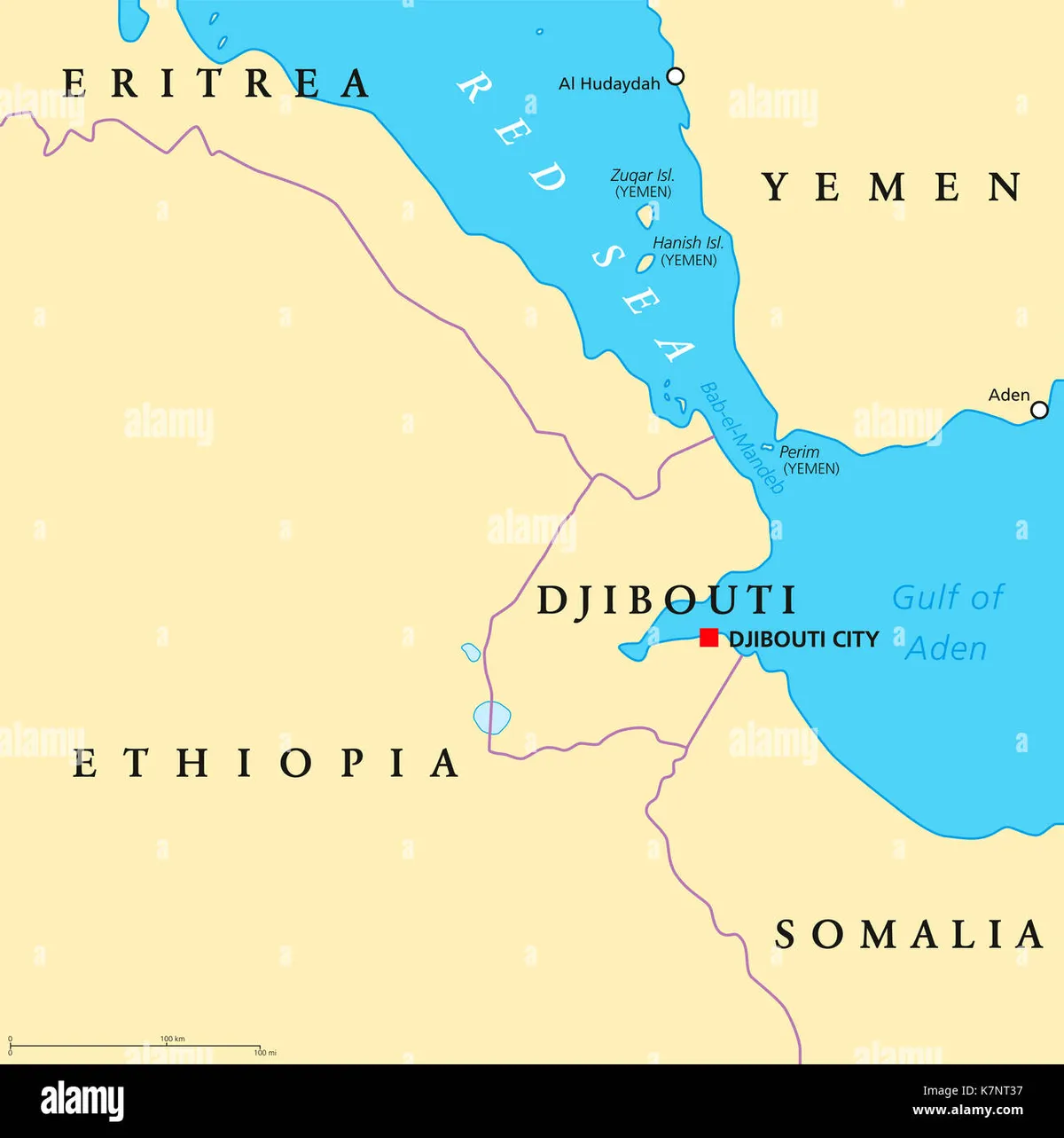
What does the rising tension surrounding the Bab el-Mandeb Strait signify for global maritime trade? The answer lies in its strategic importance as a vital conduit for approximately 10% to 12% of the world’s maritime trade, with around 4 to 9 million barrels of oil transiting daily.
Located between the Horn of Africa and the Arabian Peninsula, the Bab el-Mandeb Strait connects the Red Sea to the Gulf of Aden, serving as the entrance to the Suez Canal. At its narrowest point, the strait measures just 26 kilometers (16 miles) wide, making it a critical chokepoint for international shipping.
The geopolitical landscape has intensified recently, particularly with Iran’s threats to block the strait amid escalating tensions. The Islamic Revolutionary Guard Corps (IRGC) has made it clear that they possess both the will and capability to create credible threats against this vital passage. An IRGC official stated, “If the enemy wants to take action on land in the Iranian islands… we will open other fronts for them as a surprise…”
Supporting Iran’s ambitions, the Houthis have pledged to assist in controlling the Bab el-Mandeb Strait, further complicating the situation. This alliance raises concerns about the potential for conflict in a region already fraught with instability.
The Bab el-Mandeb Strait is often referred to as the “Gate of Tears” in Arabic, a name that reflects its historical significance and the dangers associated with navigating its waters. Since the opening of the Suez Canal in 1869, maritime traffic through the strait has surged, with cargo worth around $1 trillion passing through each year.
As one of the world’s strategic straits, the Bab el-Mandeb is sometimes dubbed “Hormuz 2.0,” drawing parallels to the Strait of Hormuz, where 20% of global energy passes through. The implications of any disruption in this area could be profound, affecting global oil prices and trade routes.
Details remain unconfirmed regarding the full extent of Iran’s plans for the strait, but the situation continues to evolve, with various stakeholders closely monitoring developments. The potential for conflict remains a pressing concern for nations reliant on this critical maritime corridor.