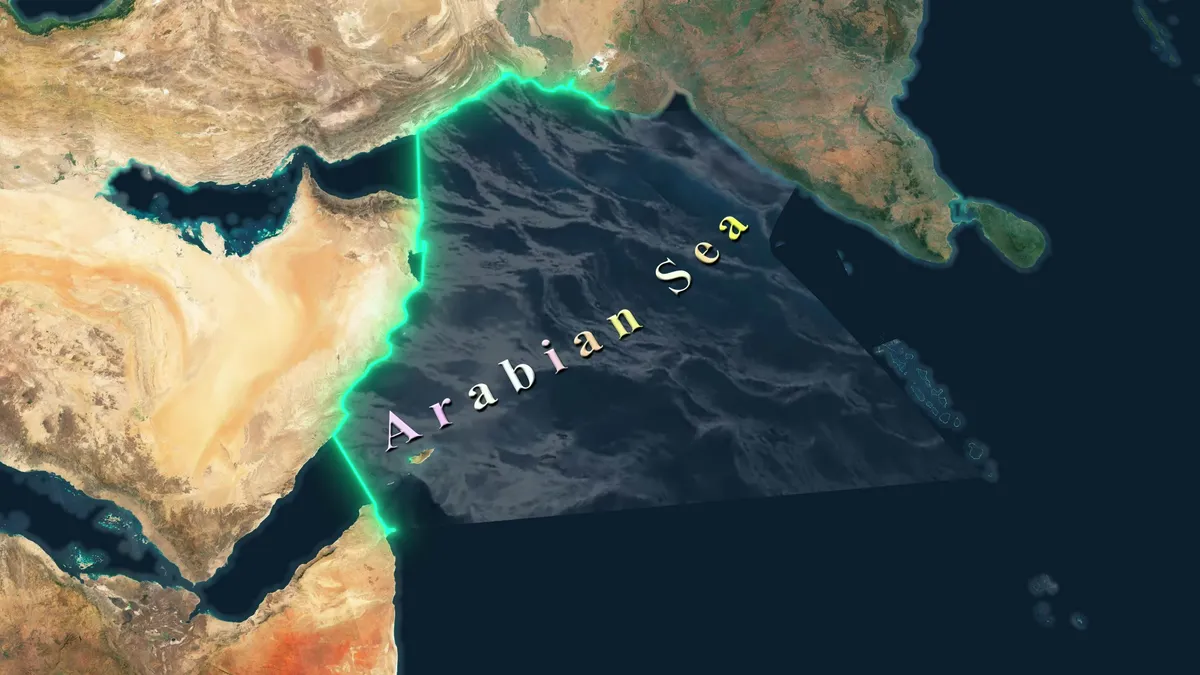
The Arabian Sea: A Maritime Hub Amidst Rising Tensions
The Arabian Sea is increasingly becoming a focal point for geopolitical tensions, particularly with the ongoing conflict involving Iran, the United States, and Israel. How are these tensions impacting maritime operations and global shipping routes in this vital region?
Recent events have underscored the strategic importance of the Arabian Sea. On March 11, 2026, the Port of Salalah in Oman was struck by drones, igniting two fuel storage tanks and disrupting port operations. Fortunately, no casualties were reported among port workers or local residents. However, this incident has raised significant concerns about the safety of oil infrastructure across the Gulf, as shipping companies are now reassessing safety conditions in light of the attack.
Adding to the complexities, the International Space Station (ISS) recently captured a striking nighttime image of India while orbiting approximately 400 kilometers above the Earth at a speed of 28,000 kilometers per hour. The well-lit cityscape of India, seen from space, serves as a reminder of the region’s economic significance and the interconnectedness of its maritime routes.
The Arabian Sea serves as a crucial maritime hub, connecting Asia, Europe, and Africa. The ongoing conflict in the Middle East has already disrupted global oil supply and increased shipping costs, making the region’s stability vital for international trade. The IMEC corridor, designed to enhance connectivity between India and Europe, is projected to reduce logistical costs by up to 30% and transportation time by 40%. This initiative is seen as a necessary response to the current geopolitical climate.
Experts suggest that the outcome of the ongoing conflict will significantly influence the future of the IMEC corridor. Rafiq Dossani notes, “If Israel and the U.S. win, IMEC will likely be Israel’s preference over the revival of Chabahar.” This sentiment is echoed by Harsh Pant, who emphasizes that the conflict has made a strong case for why IMEC is essential, with its trajectory now dependent on the conflict’s resolution.
As tensions escalate, the potential for further disruptions in maritime trade routes remains a concern. The drone strike at Salalah exemplifies how quickly the situation can change, leading to increased transit times of 10 to 20 days due to the conflict. Details remain unconfirmed regarding the exact impact of the drone strike on global shipping and energy markets, but the implications are likely to be significant.
In summary, the Arabian Sea is not just a body of water; it is a vital artery for global trade that is currently under threat from rising geopolitical tensions. The events unfolding in this region will undoubtedly shape the future of maritime operations and energy infrastructure for years to come.